
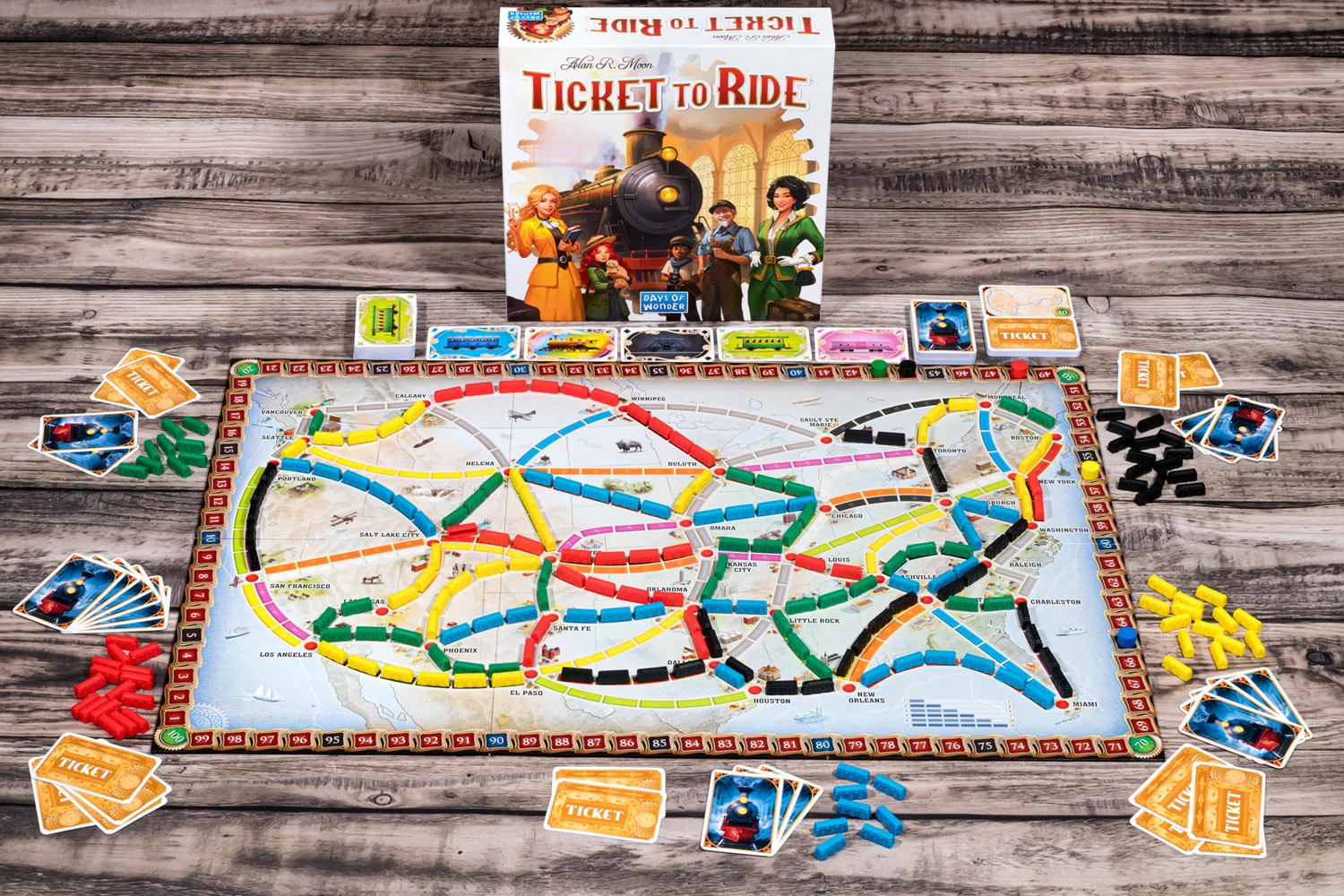
I played Ticket to Ride, a board game designed by Alan R. Moon for 2–5 players ages 8 and up. Players collect colored train cards and spend them to claim railway routes. Individual players earn points by building routes and by completing destination tickets that connect specific cities. My team’s game, Hexster, is also a route-building game, but players pair up and construct tunnels by placing tiles to meet their teammates.
Ticket to Ride asks players to track multiple resources and goals, yet remains accessible because its board functions as an information system. Hexster simplifies resources and objectives while still using board design to communicate information and reduce cognitive load. Comparing the two games demonstrates how information-design choices support different levels of complexity and different player experiences.
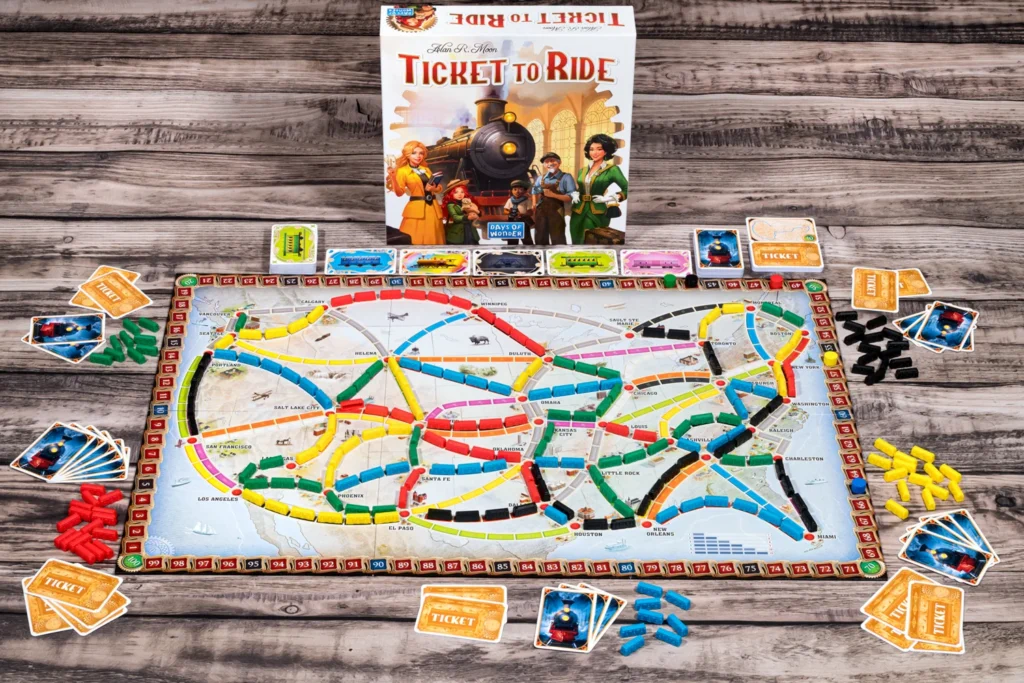
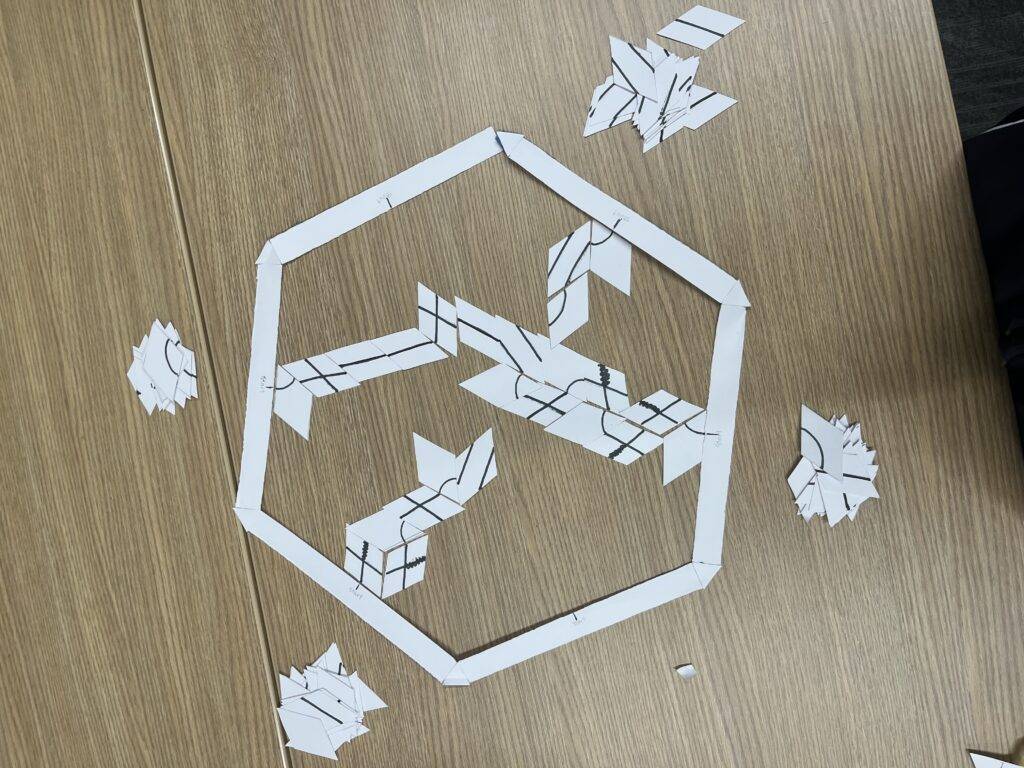
In Ticket to Ride, its physical board greatly shapes the game dynamics. The board contains an abstracted rail map of North America that defines major cities, railway connections, route lengths and colors. This fixed structure restricts player freedom but emphasizes the dynamic in which players constantly try to figure out possible routes, combinations, and complete plans. Moreover, such restriction helps create conflict dynamics because players frequently compete for the limited available paths. During my play session, I interrupted another player’s plan, which brought me a lot of Schadenfreude. In Hexster, the hexagon outlined board only contains a background triangular grid, and tiles can be placed in any direction. This brings a dynamic where players freely build the tunnels and have more autonomy.
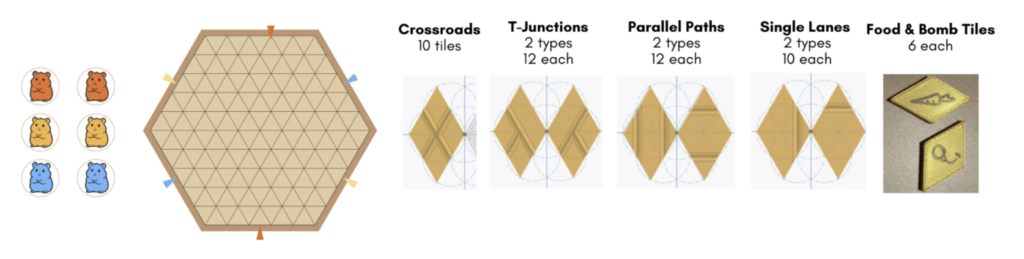
More importantly, the board functions as a visual information system. Rather than forcing players to remember route locations, completed connections, or available paths, the board externalizes this information. Similarly, there is a numbered scoring track around the edge of the board. By moving player tokens around the track, players can immediately see their own score and compare it with others. The board therefore reduces working-memory demands, and players can focus on planning and decision-making. One potential improvement concerns the orientation of city names. Because players sit around the table, many city labels must be read upside down. Since recognizing city names is essential for route planning, this creates additional cognitive load. During my play, I found it to be a huge barrier. Hexster has a simpler board design because the game is simpler. Yet the information is still visualized through placements of objects on board, including tiles and hamster tokens.
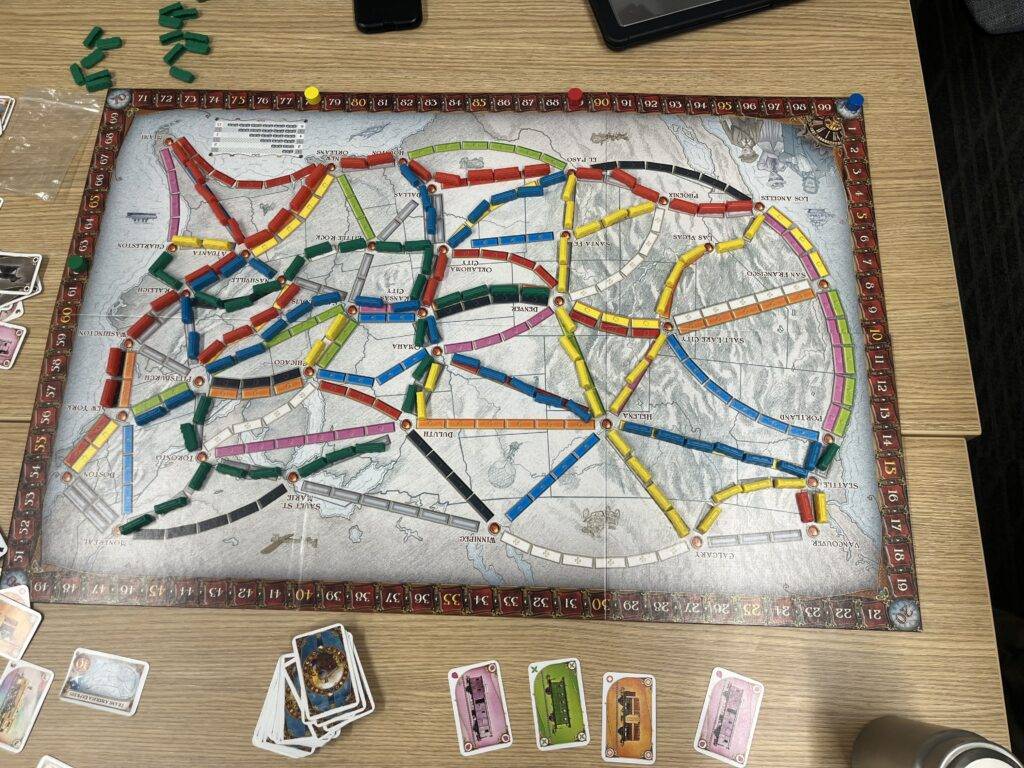
The relationship between information design and complexity becomes even clearer when examining the game’s resource systems. Ticket to Ride contains several interconnected resources, including colored train cards, destination tickets, and a limited supply of train pieces. The game’s balance emerges from cost-benefit decisions. Longer routes require more cards but award substantially more points. Longer destination tickets provide larger rewards but are riskier to complete. Drawing cards increases future flexibility but delays scoring opportunities in the present. During my play session, I frequently found myself deciding between securing a route immediately or collecting cards for a more valuable connection. The complexity from managing abundant information are core mechanics and brings the fun of Challenge where players make strategic decisions. Hexster contains one single resource – tiles; players pursue a single objective: connect with their teammate. The game intentionally reduces the amount of information players must track. There is no separate scoring system, and the board uses mostly identical tiles rather than extensive color coding. This simplicity is to match Hexster‘s intended experience: players focus on coordination and communication.
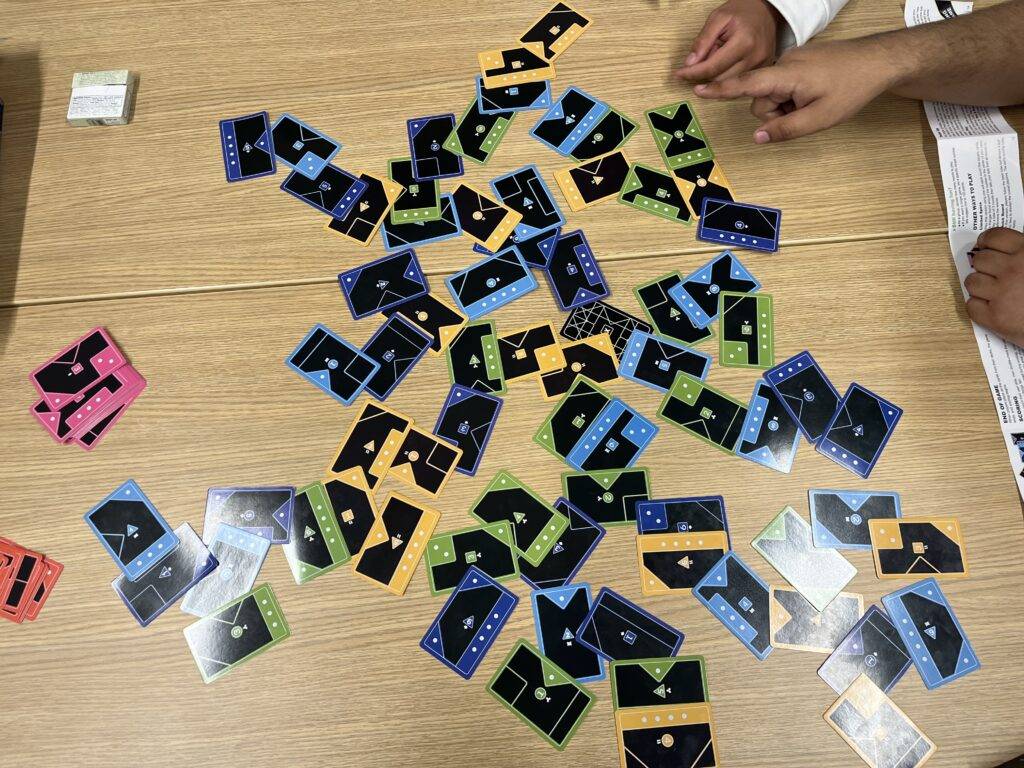
In tabletop games where placement is a central mechanic, physical structure becomes extremely important. During my play, the playmat constantly moved, causing pieces to shift slightly. Ticket to Ride solves this problem because the printed map clearly defines where every train piece should locate. When playing TACTA, a game where cards are placed freely on a table, we struggled to fix cards’ location because there was no underlying reference system. Early versions of Hexster had a similar problem because tiles drift during gameplay. This experience ultimately influenced our decision to add a triangular grid to Hexster’s board. The grid does more than organize space visually; it preserves information and helps players recover the game state when the physical reality of tabletop play interferes with it.
Information-design choices work together with the MDA framework. In Ticket to Ride, visible routes, multiple resources, and territorial competition create dynamics of planning, resource management, and blocking, producing an aesthetic centered on Challenge. The limited routes created competition between players and produced the fun of Fellowship. For example, near the end of the game, I only needed a single train placement to win. Other players began claiming the remaining short routes, even when doing so did not significantly improve their own scores. In Hexster, simpler resources and cooperative objectives create dynamics of coordination and prediction, producing fun of Fellowship. The challenge comes less from optimization and more from understanding another player’s intentions.
Overall, Ticket to Ride demonstrates that physical game components are not merely containers for gameplay but active tools for managing information. Its board, route network, scoring track, and resource systems allow players to engage with a relatively complex strategic game without overwhelming their working memory. Successful game design is not just about creating interesting mechanics, but also about helping players understand and navigate the information those mechanics generate.