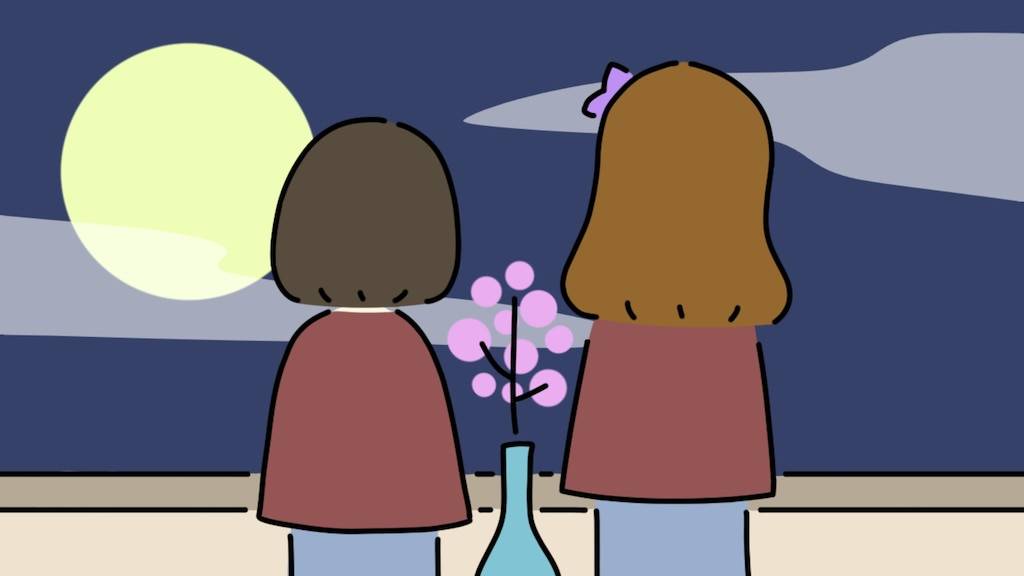
one night, hot springs is an indie visual novel game developed by npckc and released for PC. It follows a transgender woman, Haru, as she navigates a trip to a Japanese hot springs with her friends. The game is targeted towards casual and open-minded players and introduces them to the experiences of people who live outside the rigid gender binaries enforced by conservative areas. Playing this game as a feminist means to engage with the narrative of the game, not through domination as a source of victory, but through radical empathy as a way to better validate and gain perspective of the lived experiences of trans women in society.
Mechanically, this principle is expressed with the evaluation of the gameplay. This game relies on player input to make dialogue choices on behalf of Haru. However, these choices only sometimes have an effect on the narrative of the game, and mostly serve to give context to Haru’s inner dialogue, representing a conflict in her head, or to telegraph her worry. As a result, the visual novel is a lot more kinetic in nature compared to other, more choice heavy novels in the genre. Chess would argue that this style of gameplay is an example of feminist structure: rather than having the player manipulate the narrative in search of victory, the game invites the player to experience the narrative as is, and to practice empathy for the story they are being welcomed to witness. Furthermore, Chess references Judith Roof to posit that a queer narrative such as the one in this game rejects convergence to a climax, instead existing in a “never-ending narrative middle”, not unlike the genuine experiences of trans women in real life. A feminist evaluation of this dynamic illustrates a creation of Fun as Narrative for the player, as they gain enjoyment from the understanding they gain from seeing this perspective play out.

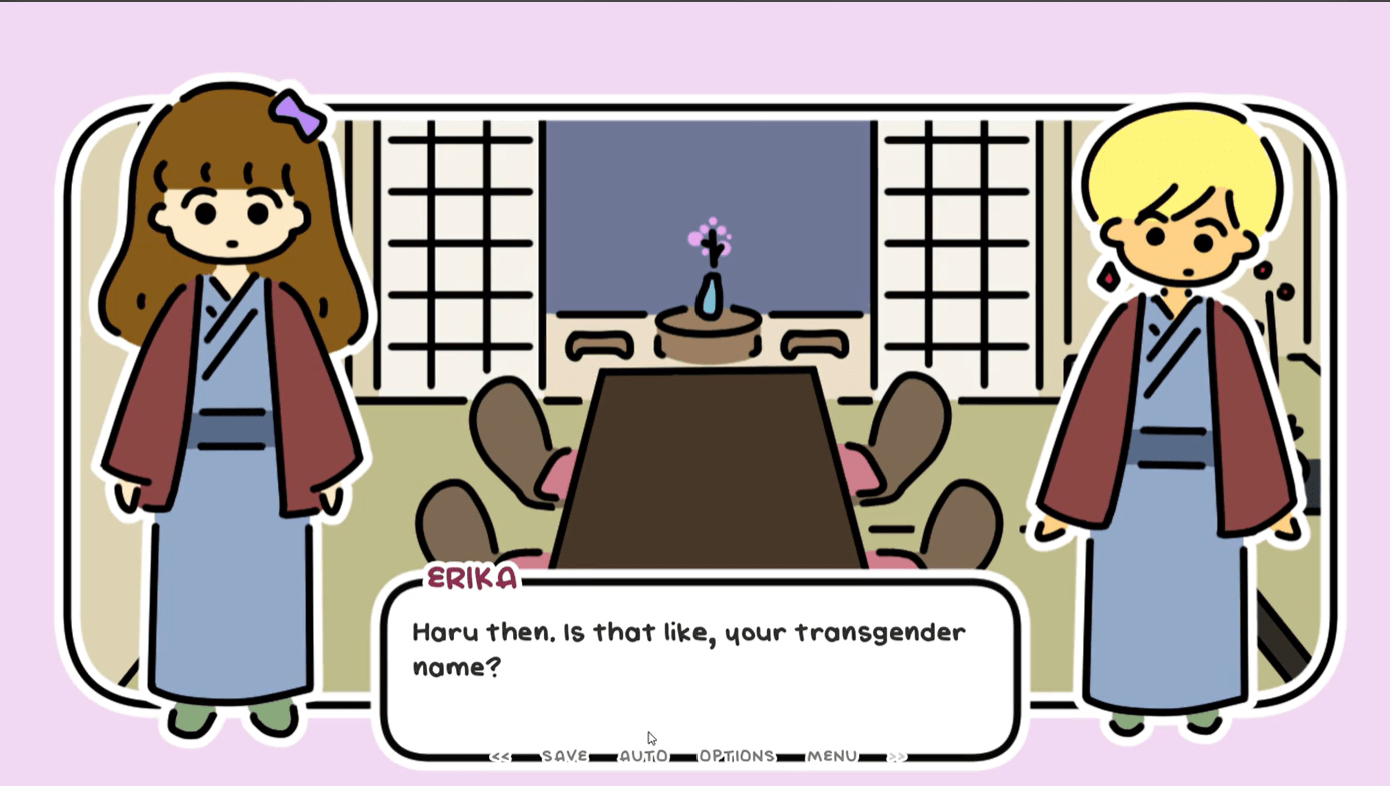
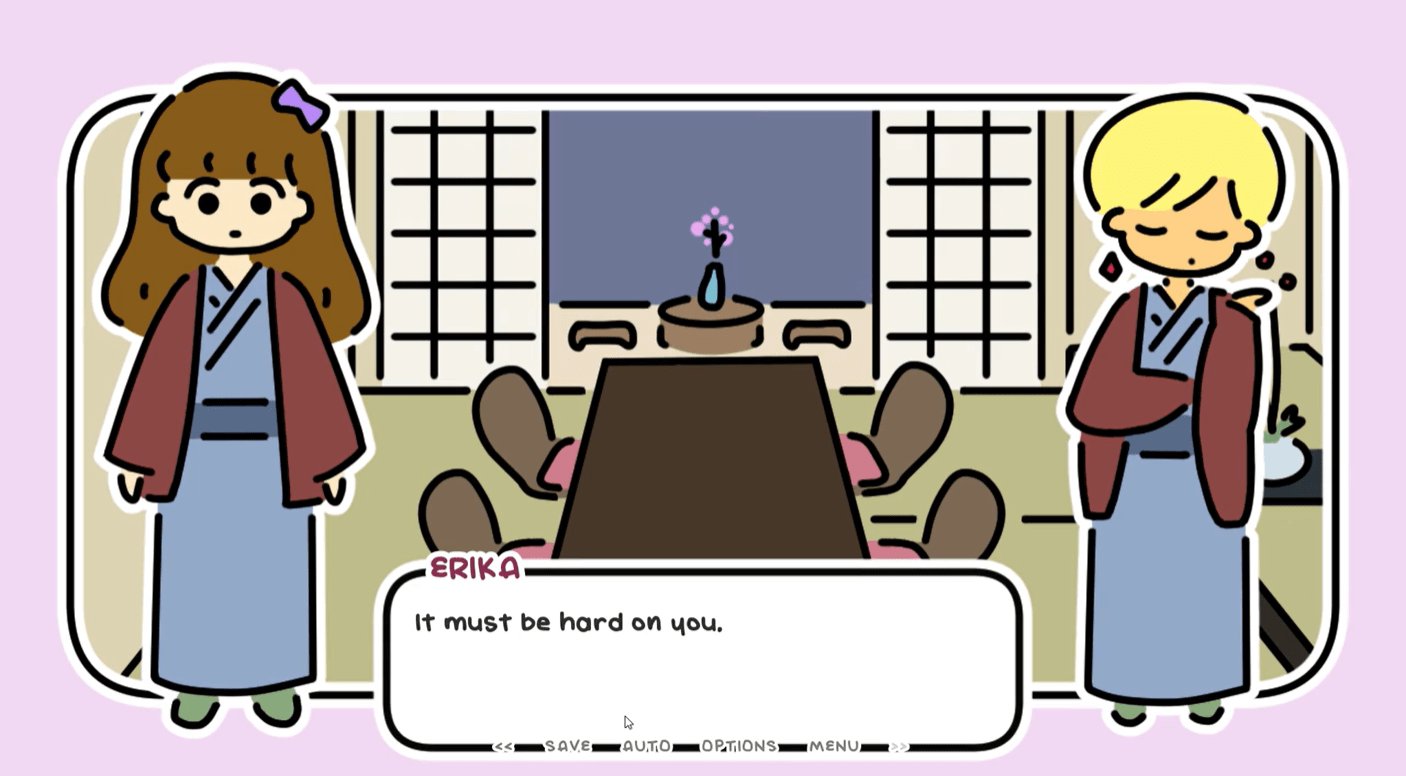
Furthermore, evaluating the game through the lens of scholars such as Gray, Malkowski, Russworm, and Shaw show that the game represents gender in a manner that highlights feminist design. More specifically, the game is designed to not require direct player identification with the character, taking influence from games like Legend of Zelda and Metroid as positive representations of gendered protagonists that can be enjoyed by players of any gender. Not only does the game create moments for empathy for Haru, the game also recognizes that many non-trans individuals will be playing the game and adds a character, Erika, who serves as a surrogate for players who aren’t familiar with trans issues. Although many of the comments she makes are ignorant, her depiction shows a genuine will to understand transness that is accepted and validated by Haru’s inner monologue. Chess describes these choices in the narrative as “affective systems” that in this game are meant to make the player think deeply about how they exist in relation to transness. Looking at the game as a feminist shows that the addition of a character like Erika exists in this game as a way to extend the practice of empathy to people who do not understand transness.
The game also makes a point to represent Queer Joy. While the main character goes through plenty of turmoil, the game also never victimizes Haru, and each ending rejects the idea of denying her agency – no matter where the narrative leads the player to, it is a focus that Haru made those decisions of her own will. There are also many examples of characters who act supportive to Haru, sidestepping her tendency to self-preserve and giving her the space to exhibit genuine joy. Importantly, Haru is able to affirm and find community in other queer characters as well, such as Erika. This is something Chess would argue exists while designing through a feminist framework, prioritizing representation as a strategy for empathic gameplay rather than restricting a character to the lowest common denominator. The fact that queerness is directly celebrated in the game illustrates its rejection of using the narrative as a form of subjugation and instead as a way of creating meaning and validation.
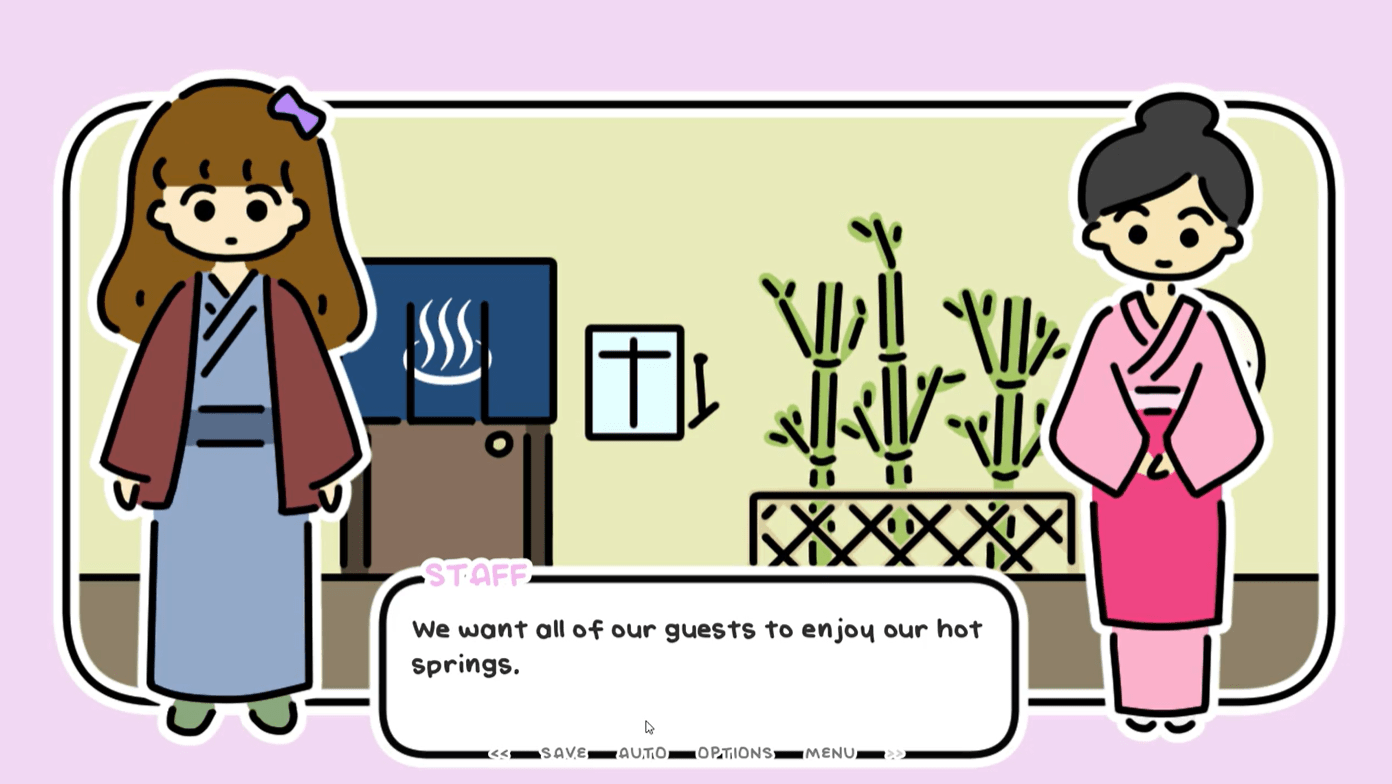
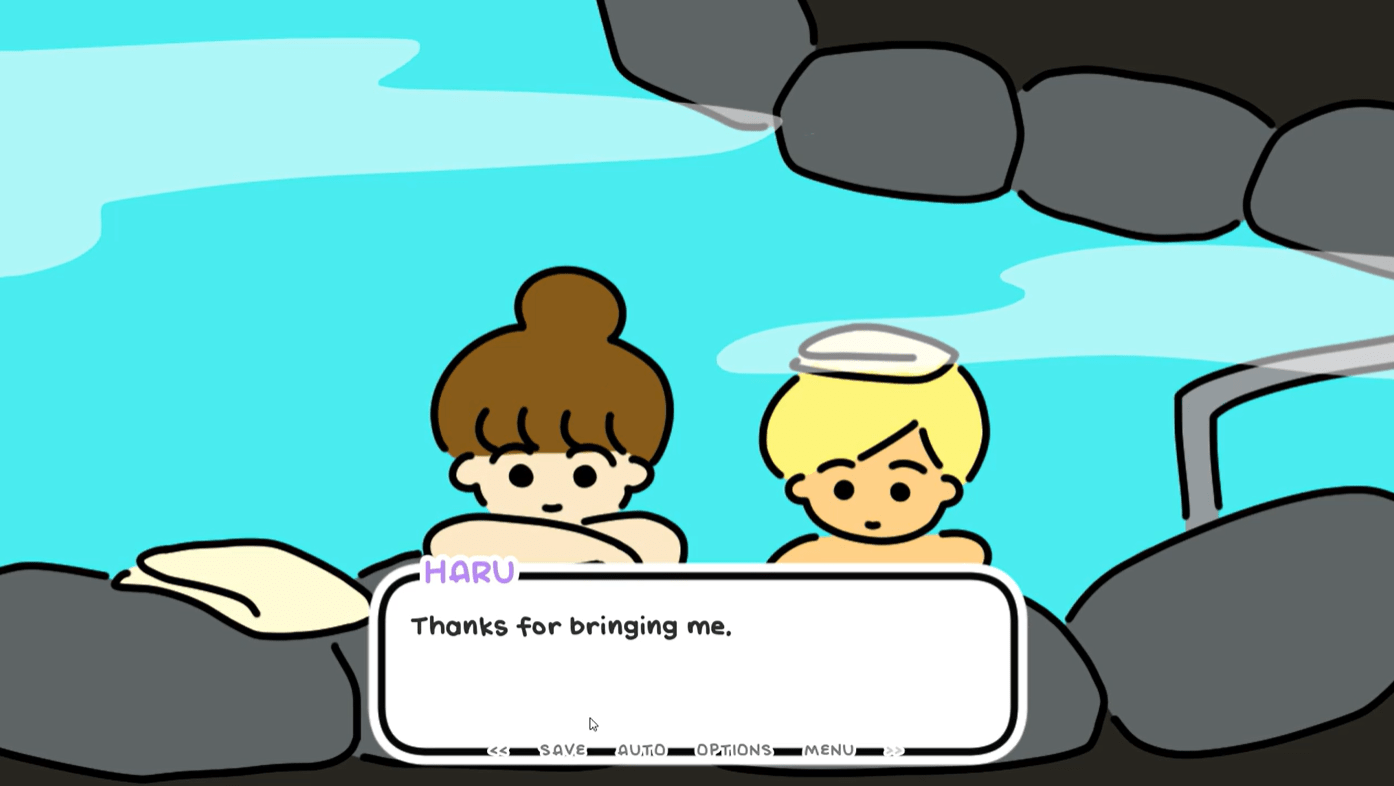
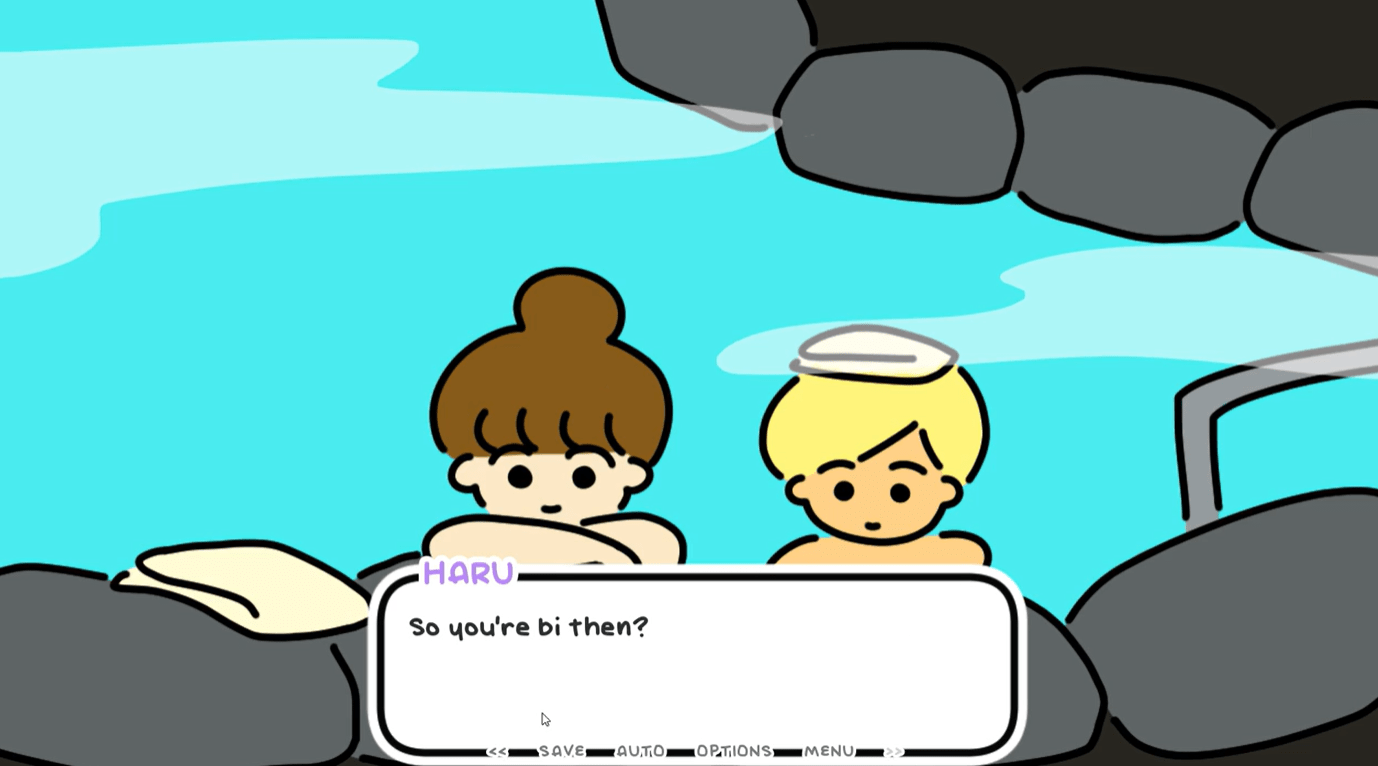
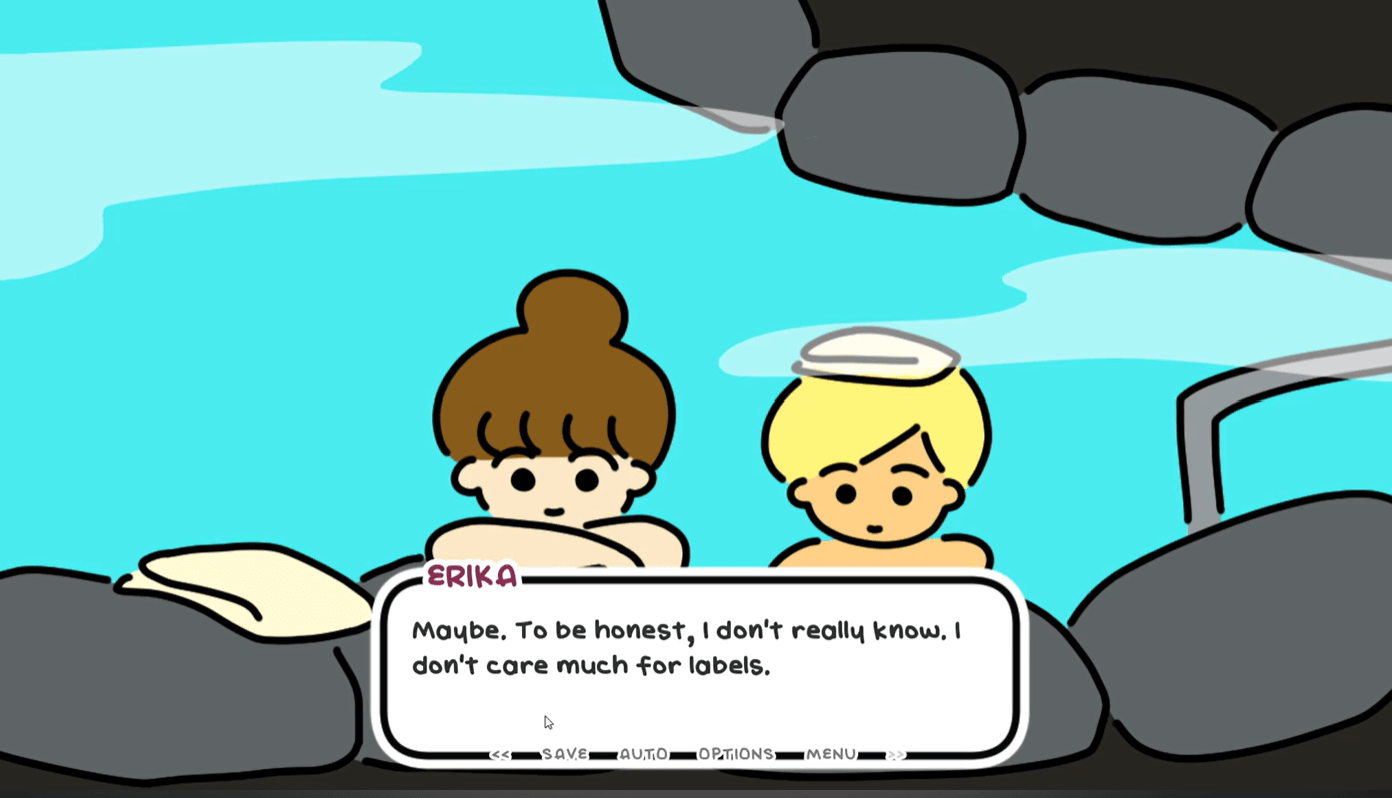
I also see a potential critique of the game when evaluating it through a feminist lens: the game is clearly targeted towards an audience who may not be familiar with trans people or transness as a whole. Chess explains that many games designed outside a strictly male audience tended towards utilitarian intentions that focused on educating rather than creating leisure or play for the player. However, I think that when this game released, 2018, the average player’s comfortability or even awareness of trans issues even domestically was quite low, much less their awareness of trans issues in countries like Japan. I think for the time, a feminist positive depiction of trans women in this type of game was rare and eye-opening for a lot of players, allowing me to excuse its sometimes pedagogical nature a bit more. If this game was remade today, I would say the game could be improved by adding more choices, representing more agency for Haru. I would also add choices that act as subversion and protest against an oppressive system. Maybe on a replay, Haru could pick choices that allowed her to affirm herself, rather than needing to be affirmed by other characters in the game.
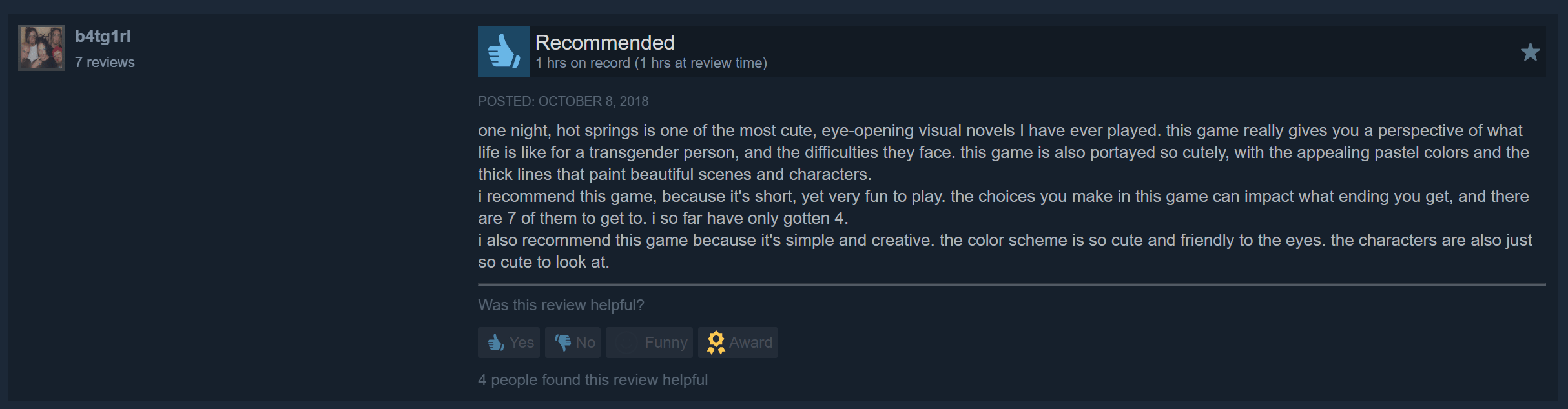
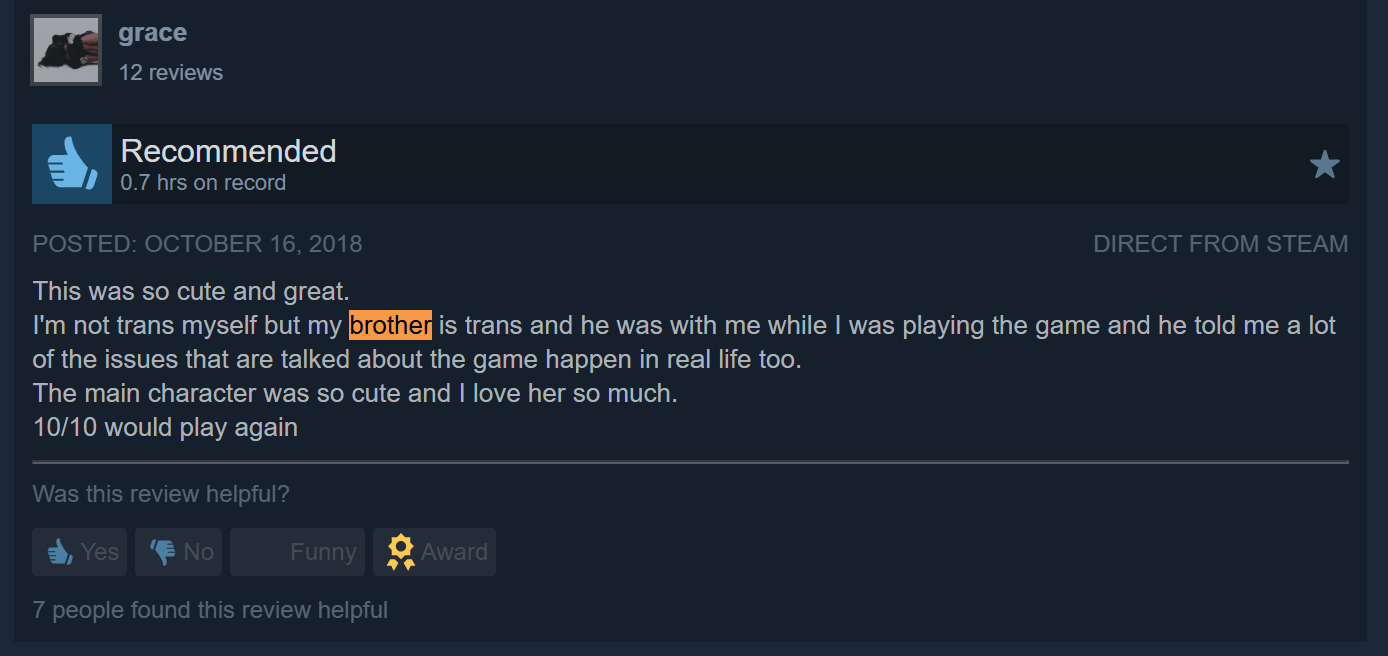
Overall, I think playing one night, hot springs as a feminist illustrates the importance of the positive representation of trans women in video games, as well as the importance of designing for player empathy.