
“I hope this hurts.”
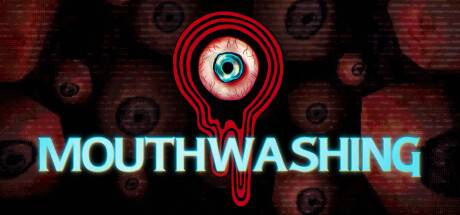
Those are the first words of Mouthwashing, a 2024 psychological horror game developed by Swedish studio Wrong Organ and published by Critical Reflex for PC. It is not a game for everyone. Its target audience is adults who can stomach bleak, uncomfortable stories—players who want to feel bad and sit with that feeling.
There’s a saying—often misattributed to Foucault—that everything is about sex, and sex is about power. Sex can be transformative and equal, a space where power is consensually negotiated. But in Mouthwashing, sex means something else: a rape, a forced pregnancy, a captain who does nothing, a ship full of men who refuse to act. Playing Mouthwashing as a feminist means refusing to look away and refusing to let the “good men” off the hook.
I argue Mouthwashing is not a game about a simple monster. It is a game about men who enable monsters—and the systems that let them.
 Curly is nice. He is good at his job. His crew trusts him. He tells Jimmy, “I can fix this.” But he does nothing. He knows Anya was raped. He tells Jimmy that she told him. He prioritizes his friendship, his perfect delivery record, his own comfort. The game shows you Curly’s face before the crash. He is handsome. Confident. The kind of man you’d trust. That is the point. We’re taught that monsters are easy to spot in games. Here, the men who let monsters thrive are not. They look like Curly. They talk like Curly. They say “I can fix this” and then do nothing.
Curly talks to Jimmy about the “solution,” not Anya. “We can figure all of this out,” he says. “You and me.” The cutscene is interrupted by a screen begging Curly to “TAKE RESPONSIBILITY”—a stark contrast to his vague promise to “take care of it.” Through a flashback, we learn Curly had dismissed finding a solution with Anya entirely: “I’ve known him for a long time. I’ll talk to him.” She was never intended to be part of the “we.” When Jimmy walks to the cockpit to crash the ship, Curly hesitates. He does not stop him. That hesitation is his choice.

Shira Chess writes that agency is a necessary part of a feminist definition of equality. In Mouthwashing, Anya has none. She cannot lock her door—the crew quarters have no locks. She cannot access weapons—the black light that opens the gun case belongs to the captain. She cannot leave the ship. She cannot escape her pregnancy. Her only act of agency is suicide: an overdose of the remaining painkillers. The game does not frame this as heroic. It frames it as tragic. And that is the critique: when a woman has no other choices, death becomes the only one left.
Chess argues that video games can become agentic training tools—spaces where players practice exerting agency within systems weighted against them. Mouthwashing trains you in the opposite. You cannot save Anya. You cannot punish Jimmy (not really). You can only witness the out of order story. The mechanics—walking through cramped halls, force feeding Curly his meds as Jimmy (hoping it hurts?), reading logs—it all forces you to inhabit helplessness. You are not told Anya is trapped. You feel it.
The Tulpar’s cargo hold is filled with mouthwash. The crew reads the ingredients: 14% ethanol, but too much sugar to be used as disinfectant. “It kills 99.9% of germs,” Swansea notes. But what about the .1%? That .1% is Curly. It is the margin of inaction. It is the good intentions that don’t go far enough. Anya knows this. She points out a dead pixel on the skyscreen, that “If you look really, really close, you can see there’s a dead pixel in the upper right corner” Curly waves it away because one little issue won’t break the illusion. He prefers the larger picture. That is the difference between them. Anya cannot unsee the flaw. Curly has the choice not to. The .1% is all it takes.

This is where the ethics question lives. Chess warns that feminist intervention should transform conditions, not just document oppression. Mouthwashing refuses catharsis. It refuses a strong female protagonist. It makes you play as the rapist—or occasionally as Curly, the captain who failed—forced to sit inside Jimmy’s insecurity and self-pity. But does it transform anything? Anya remains dead. Curly is sealed in the cryo pod, alive, waiting—preserved in his inaction potentially exiting stasis in 20 years. The game offers no justice, no escape, no hope.
I would argue that transformation happens in the player. You leave Mouthwashing feeling something. Anger. Despair. Horror. Unable to say “I am a good man” without hearing how hollow it sounds. The game’s opening promise—I hope this hurts—is fulfilled. If one player leaves and decides to act differently, to be less Curly, the game has done something. But the risk remains: is Anya’s suffering being used as a tool for the player’s growth? The game walks this line carefully. Not perfectly. But carefully.
Unlike Silent Hill 2, which offers catharsis through its “leave” ending, Mouthwashing gives you nothing to hold onto. No escape. No answer. No final girl. What differentiates it is its refusal to let you feel good at the end. If I could improve it, I would give Anya one scene where she speaks directly to the player—not to Jimmy, not to Curly, but to us. Her last words are said to a locked door. Let her say them to the camera or better yet don’t give players those intimate last words from a chocice she shouldn’t have had to make.
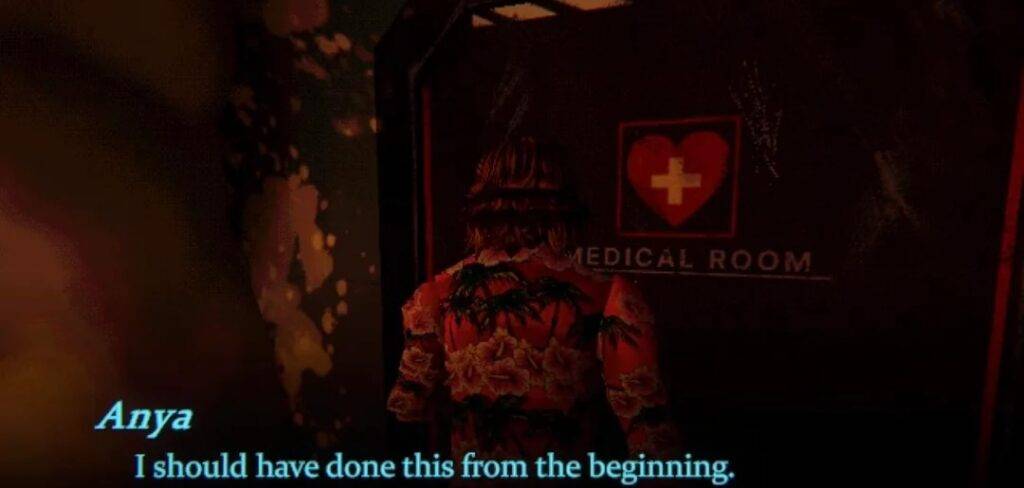
Mouthwashing is bleak because the reality it depicts is bleak. A different game would give you catharsis. A revenge arc. A final girl who fights back. Chess writes that we need to destroy the video game industry as it is currently known. Mouthwashing destroys. It refuses the comforting revenge narrative. It demands that you sit with the discomfort and ask: what would I have done? Would I have been Curly?
The game hopes certain people play it. I hope they see themselves in Curly—the nice man who failed to act, the good man who protected his friend over his crew member. I hope they see themselves in the .1%. Playing like a feminist means sitting with that hurt. It means refusing easy catharsis. It means demanding better—from the games we play, from the people we trust, from the systems that should guide, not enable. Mouthwashing does not offer solutions. It offers a mirror. Look. And hope it hurts.