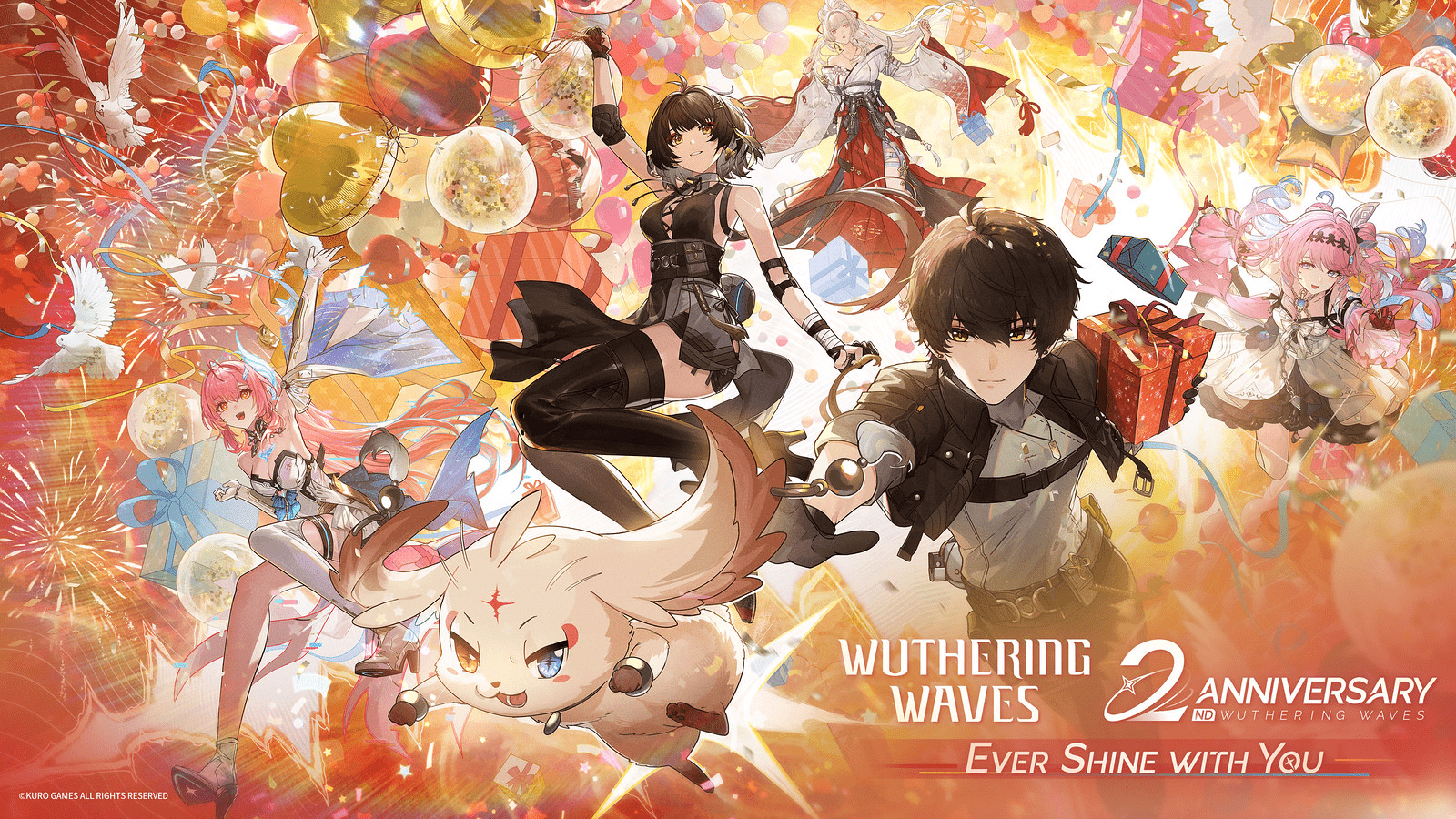
The open-world action RPG Wuthering Waves, or “WuWa” for short, was released to the public on May 23rd, 2024: almost exactly two years ago. Naturally, the developers at Kuro Games have put together an 2nd Anniversary event, through which players on all platforms (PlayStation, Android, iOS, MacOS, Steam, and Windows) can get a wealth of in-game rewards.
These sorts of events are usually causes for celebration among WuWa‘s target audience of hardcore gacha gamers, as well as significant revenue generators for the game developers. However, the event also highlights some more insidious inner workings of today’s most popular gacha games. By misleading, overwhelming, and putting pressure on players, Wuthering Waves‘ 2nd Anniversary event lays the groundwork for a harmful, potentially addictive experience for players who aren’t careful.
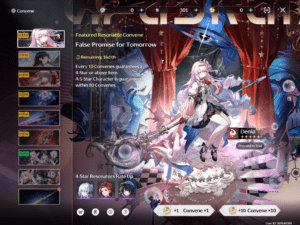
To start, it’s worth noting the sheer amount of rewards that this event gives to players. Upon simply logging in to Wuthering Waves anytime during the event, players receive enough in-game currency to “Convene” (gamble for a chance to win a new playable character) forty times. Playing through WuWa‘s various limited-time event quests provides enough to Convene over one hundred times in total. With these rewards, I was able to get a 5-star character within my first hour of gameplay. This, I will freely admit, was genuinely very exciting, especially given the fanfare that the game gives to 5-star pulls with flashy animations and sweeping orchestral music.
If that sounds like a LOT of resources to give to a brand-new player for free, that’s because it is. Getting this much currency in WuWa outside of the event would mean playing for hours and hours every single day to maximize the daily rewards. Therein lies the problem. This temporary generosity acts as a priming or entrapping mechanism. The game gives players a sweet taste of victory during the event before presenting them with a harsh ultimatum: “If you want to keep getting this much value at this rate, you can either grind for hours every day, or you can spend some real-world currency.” In this way, players are conditioned to normalize spending either a lot of time or a lot of money (or both!) in order to keep enjoying the game in the same way.
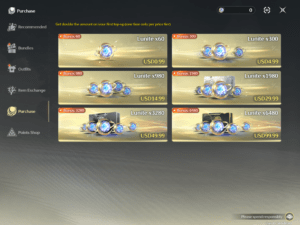
These false pretenses also amplify what Schüll refers to as the “near-miss” effect. I was contented with getting just one 5-star character, and I wasn’t attached to the game after only a few hours, so I was able to put it down after that without much trouble. However, imagine if I was a longtime WuWa fan, logging in every day for months, and I had spent all of those resources without getting that character. Even worse, imagine if I had gotten a 5-star character with that abysmally low 0.8% drop rate, but it wasn’t the one that I personally really wanted. That would be quite an emotionally, cognitively vulnerable position: one in which someone could probably very easily be convinced to spend an additional $5, $10, or $25, just to finally get that sense of satisfaction. It’s a dangerous combination of the sunk cost fallacy and the “FOMO” pressure baked into the event’s limited time frame that motivates players to spend money when they otherwise might not.
Plenty of live-service games have events like this with exclusive rewards for players who participate. However, in my view, what separates Wuthering Waves in particular (and other similarly structured games like miHoYo’s Genshin Impact) is the way that the rewards actively affect the gameplay experience. Though Overwatch has limited-time loot boxes for its events, those loot boxes only contain cosmetic items. New outfits are nice, sure, but they don’t change the game’s balance. By contrast, the 5-star characters and weapons in WuWa are strictly, objectively, more powerful and versatile than the others. Having a 5-star character on your team arguably makes the game easier, less tedious, and more enjoyable. The game doesn’t balance rewards across rarities, nor does it pretend to; and of course, having two or more 5-star characters is even better than having just one.
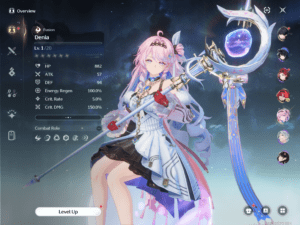
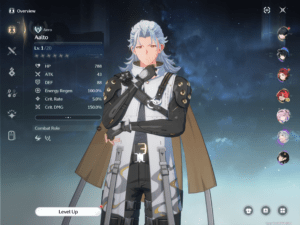
To me, this is what makes the usage of chance in WuWa and other gacha games somewhat morally impermissible. It’s not just that some events are random; it’s the fact that a player’s willingness to engage with the randomness (by spending money) directly impacts their enjoyment, AND that WuWa uses various forms of psychological pressure to further compel the player to spend that money in the first place.
Wuthering Waves isn’t just a fancy-looking slot machine. Its expansive open world and fast-paced combat system provide ample Fun as Discovery and Fun as Challenge, respectively; and I was pretty interested in its embedded / enacted narrative. Nonetheless, the design choices that undergird the game’s presentation cannot be ignored, and any new player looking to get into games like this should be aware of what the game is trying to get out of them.