For this week’s Critical Play, I played The Legend of Zelda: Tears of the Kingdom (TotK) on my Nintendo Switch. The game was developed and published by Nintendo and released on May 12th, 2023. It is currently available on both the Nintendo Switch and Switch 2, and it is intended for a wide audience across various backgrounds, with particular appeal to children and teenagers.

While replaying TotK, one moment stood out immediately. After Zelda vanishes and Link wakes on the sky islands, he takes a long dive from his starting point down toward the main island below — and as he falls, the game reveals the full sweep of the sky and the world beneath it, accompanied by the main logo. The scene strikingly echoes the iconic opening of BotW, where Link steps out of the Shrine of Resurrection for the first time and encounters Hyrule’s vast landscape. Both moments are statements: this is the world you will explore, and every place you can see is somewhere you can go. Yet neither game pushes you toward any of it – TotK makes suggestions, but there is no enforced order. This same logic is how the game invites you to care about Hyrule. It refuses to tell you about the world directly, and instead carefully designs its mechanics, narrative structure so that players discover the world for themselves. That engineered process of discovery, combined with the free, build-as-you-go gameplay, creates the deeply immersive experience characteristic of the BotW–TotK design philosophy.
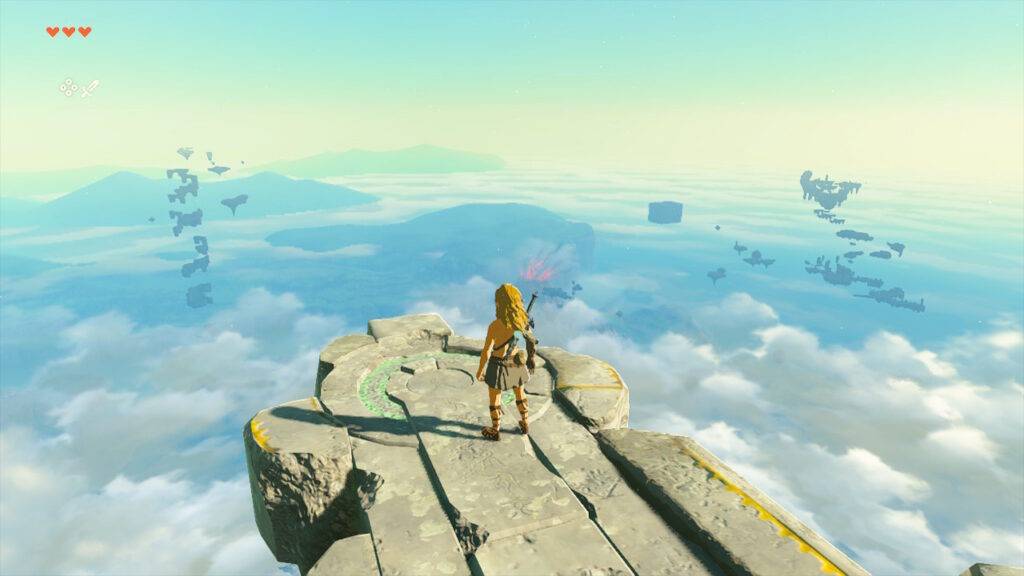 [Fig 1. Right before the big dive – we can see the sky islands and the vast world beneath it.]
TotK’s gameplay mechanics actively foster exploration. Unlike traditional Zelda games, Link can climb almost any surface and paraglide from any height — two mechanics carried over from BotW that effectively remove traversal as a barrier. TotK builds on this: the Ascend ability lets Link pass up through ceilings, and Ultrahand lets him assemble his own vehicles — hoverbikes, gliders, rafts — from Zonai devices scattered across the world. This freedom of exploration yields a dynamic where players constantly digress from the main path to investigate something in the distance: an enemy encampment, a light flickering in the Depths, etc. Crucially, the game doesn’t push back against this. There are very few quest gates, and the four main regional storylines can be tackled in any sequence. The game refuses to tell you where to go, which means wherever you end up is your choice. This shifts the player’s role from passive story-follower to active discoverer — and it is the first reason the player comes to care about Hyrule. The world stops being something the developers show you and becomes something you want to uncover. Every cliff climbed, every cave entered, every contraption built to reach a place no quest ever sent you — these become yours.
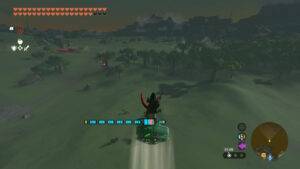
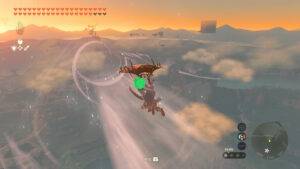
[Fig 2.2, 2.3 – Mechanics that enable exploration. We could craft Zonai hover bikes (left), or paraglide from tall heights (right).]
The narrative structure follows a similar logic. Compared to previous Zelda installments where players follow a linear story path, what distinguishes the BotW–TotK era is that the story itself is fragmented. TotK opens on a cliffhanger mystery — what happened to Zelda, and why do the ancient Zonai seem to know her? — and the game leaves you to assemble the answer. The most direct vehicle is the twelve Dragon’s Tears, scattered across Hyrule inside enormous geoglyphs. Each tear plays a cutscene revealing one fragment of Zelda’s fate in the distant past, and the player can find them in any order. The four Sage quests work the same way: each unfolds the present-day story of a region, and none are required or sequenced. Even the environment carries narrative weight without explicit telling — the Zonai ruins scattered across Hyrule and the wall paintings beneath the castle let the Imprisoning War backstory accumulate through artifacts rather than exposition. The game trusts you to assemble its story, and that trust is what makes the story feel like yours.

[Fig 3. From the opening sequence – Zelda falls to the depths, nowhere to be seen afterwards.]

[Fig 4. A geoglyph in the distance – Dragon’s tears can be found on such large drawings.]
What’s also notable is how the player meets Hyrule’s people. The NPCs and side quests scattered across each region put the player in actual contact with the four cultures — not as scenery, but as communities with grievances, customs, and history. Some Zora elders still resent Link for failing to save Mipha in BotW, and a statue now stands in her memory; in Gerudo Town, women lament the difficulty of finding husbands; in Goron City, side quests ask you to help locals find the right rocks to eat. The provided article on psychology of world building argues a supporting cast establishes what is “normal” in a world; in TotK – this is exactly what NPCs do. These add on to the game’s narrative experience, and players who take the extra step to explore and interact with the game’s inhabitants are rewarded with a Hyrule that feels populated rather than displayed.
While TotK’s worldbuilding succeeds on most fronts, one mechanic deserves more critical attention: the sage abilities. After completing each sage’s questline, Link can summon that sage’s signature power, and three of the four are tightly tied to the biological traits of the sage’s race. Tulin’s wind gust reflects the bird-like nature of the Rito; Sidon’s water bubble shield reflects the aquatic Zora; Yunobo’s cannonball roll reflects the stone-hardness of the Gorons. Only Riju’s lightning strike departs from this pattern — Gerudo bodies are essentially human, so her ability is rooted instead in the desert storms surrounding her culture rather than in her body. This framing carries a troubling undertone: it is the same biological essentialism we identified in D&D, where ability is presented as an inherent property of race rather than something learned. A simple mod could address this. Instead of summoning the sages to cast their abilities, Link could learn the abilities from each sage during their questline — the wind gust becomes a Rito gliding technique anyone could train in, not a Rito birthright. This small reframe severs the link between race and ability, suggesting that what people can do is shaped by culture and training rather than biology.
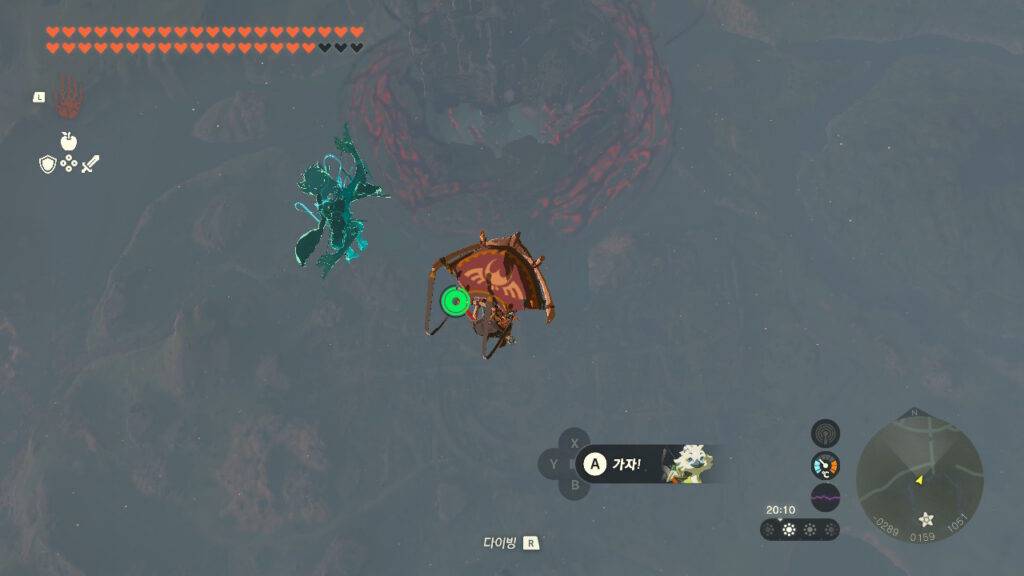
[Fig 5. Sage Tulin’s ability – while paragliding, you can summon a gust that propels you forward.]
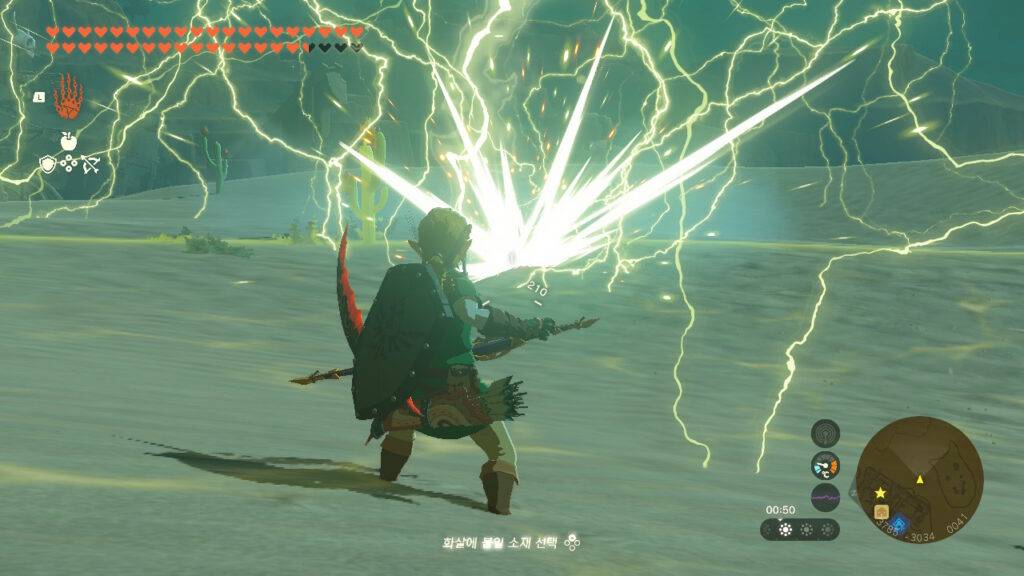
[Fig 6. Sage Riju’s ability – summon lightnings during battle.]