Losing for Fun: Social Dynamics in Tragedy of the Commons
“Deep Sea Adventure” is an initially simple experience. The 2014 board game (with later releases on digital platforms such as iOS) was created by Jun Sasaki and Goro Sasaki, and released by Japanese game publisher Oink Games. With a minimalist board filled with polygon tiles and colorful diver pawns, 2-6 players ages 8 and up try to collect as much treasure as possible on each “sea dive” over three rounds. “Deep Sea Adventure” is able to start with that simple premise and create a space for many strategies, social dynamics, and an experience that I rarely find myself engaging in with my competitive nature: purposely losing for fun.
The main mechanic of “Deep Sea Adventure” that creates the interesting social dynamics and incentives is that of the shared resource: oxygen. On each dive, as soon as players start collecting treasure, the communal oxygen begins depleting, making it harder to get back to the ship in time to keep your treasure. On my first play-through while I was learning the rules, I played against three CPUs. In the third round, I realized that there was no way I’d be able to make it back to the ship in time, and so I started taking pieces with the mindset that if I couldn’t get back, then I’d try to make sure nobody could. Purposely guaranteeing my own loss was initially disappointing, but led to its own aesthetic version of fun very quickly. Instead of my goal being to win, it became to see whether I could make others lose as well. You can see in Figures 1 and 2 that I successfully brought the oxygen to zero with my three collected pieces, stopping CPU A and CPU C from making it back to the ship in time.
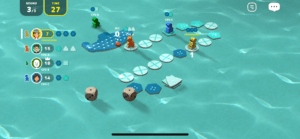
Figure 1. CPU A and CPU C aren’t quite able to make it back to the ship, and oxygen is gone!
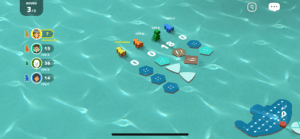
Figure 2. Yes, I might have lost… but I took CPU A and CPU C down with me!
Having played through the game once and brought about such an end, I knew that the potential results of the game could work out in mutual destruction. When I played against my friends Siqi and Aarohi, over the first two rounds we all played safely, and in the second round we all made it back to the ship with no difficulties. Going into the third round, I was in the lead, and Siqi and Aarohi were playing safely again. I decided it was time to test my luck. If I could successfully stop all of us from reaching the ship in time, then I could keep my lead and still win while having fun with depleting the shared resource. Sadly… luck was not on my side this time. Aarohi and Siqi both got extremely high dice rolls and got back to the ship quicker than I could grab treasure and slow them down. In the end, they both grabbed a lot of treasure, and my seven pieces sank to the bottom of the sea (Figure 3). Even then, I had fun purposely losing!
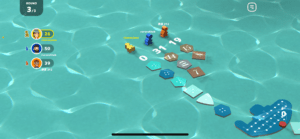
Figure 3. This time, my luck wasn’t as strong… I lost without bringing anyone else down!
Overall, the core of the fun of “Deep Sea Adventure” is in how players choose to utilize (for good or bad) the shared resource of oxygen. When it comes to this mechanic, I wouldn’t offer any suggestions for improvement to “Deep Sea Adventure.” The game has genuinely done an amazing job of creating the right incentives and stakes around it. First, they separate oxygen from the actual treasure resource, lowering the stakes of using up oxygen in any one round. Also, the random dice rolls for movement and point values on the treasure tiles makes it so that even when players play nice and safely, there is still fun to be had from seeing the results of pure chance. The natural build-up of oxygen starting to deplete faster as people are greedier with grabbing treasure leads to good tension between wanting to grab more points and wanting to guarantee you keep them. Overall, the game does a masterful job of handling oxygen to provide the potential for fun in many ways—especially that of losing for fun, something I rarely choose to do!
The success of “Deep Sea Adventure’s” mechanics around a shared resource provides great guidance for Team Boa’s own game, “Rock-it.” The idea of a shared resource that everyone draws from mimics the concept of “tragedy of the commons,” where individuals acting with self-interest can deplete it for everyone. This concept was the original inspiration for “Rock-it,” and it plays out perfectly in “Deep Sea Adventure.” While other games such as Coup and Mafia have some similarity to the bluffing and role-based aspects of “Rock-it,” I have not had experience with any game that is as successful in bringing about the tragedy of the commons as “Deep Sea Adventure.”
Learning from “Deep Sea,” mechanics such as separation of shared resource and point resource, or the addition of random chance into games to still have a fun experience when playing safely, are particularly ones that could be useful to add to “Rock-it” to balance the incentives. This is especially the case as we see people either trying to be overly greedy in playtests (because the shared resource is the point value), or people being too safe and leading to no difference for any players (because there is no variety of random chance). By learning from these mechanics of “Deep Sea Adventure,” we can hopefully create similar dynamics in “Rock-it,” creating a game where there are many different ways to have fun—including using up a shared resource and losing while at it!