What I love most about social deduction games like Mafia, Avalon, or Among us, is cooperating with others to figure out missing information. In all of these games, players discuss with others to get the big picture, identify where each other’s testimonies clash and pin down the liar. The fellowship type of fun — as defined in the MDA framework — that arises during this process is something I genuinely enjoy in playing these games. That being said, I wasn’t able to feel that fellowship while playing Coup. Although it is a social deduction / bluffing game, its survival objective and elimination mechanics actively work against cooperative dynamics. Our game preserves Coup’s free-for-all format but modifies the mechanics to restore the cooperation and fellowship that Coup is missing.
Coup is a social deduction card game created by Rikki Tahta and published by Indie Boards & Cards and La Mame Games in 2012. The target audience is players of age 14 and up, and it is a 2–6 player game. It is currently available as a physical card game and online via platforms such as chickencoup.com (PC) or mobile apps. The core mechanics of the game are as follows: Players are each assigned two secret role cards, and may freely bluff about which roles they hold. On their turn, a player claims an action — typically collecting coins or spending coins to attack another player. Other players may challenge or block these claims. The goal is to eliminate all other players and be the last one standing. The actions available to each role are shown in the image below.
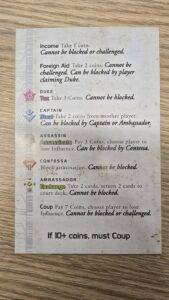
[Figure 1 – Player Actions in Coup, depending on roles]
These elimination mechanics and survival objectives make the dynamics and aesthetics of Coup deviate significantly from other social deduction games. In Mafia or Avalon, identity is everything — players cooperate to surface information and deduce who is lying. In Coup, identity is secondary. What matters is who can hurt you next turn, and that shift changes the social dynamics at the table. I experienced this firsthand – during my gameplay, I claimed to be the Duke and collected three coins for three consecutive turns. However, nobody questioned my identity or showed any interest in who I was. But the moment I accumulated nine coins — enough to launch a coup — other players immediately attacked me, even though I had not attacked anyone yet. This example clearly illustrates how the MDA of coup is different from other games – the elimination mechanic, combined with the survival objective, produces dynamics of active threat monitoring instead of cooperation. This greatly diminishes the fellowship type of fun, as interaction with other players is no longer beneficial for anyone.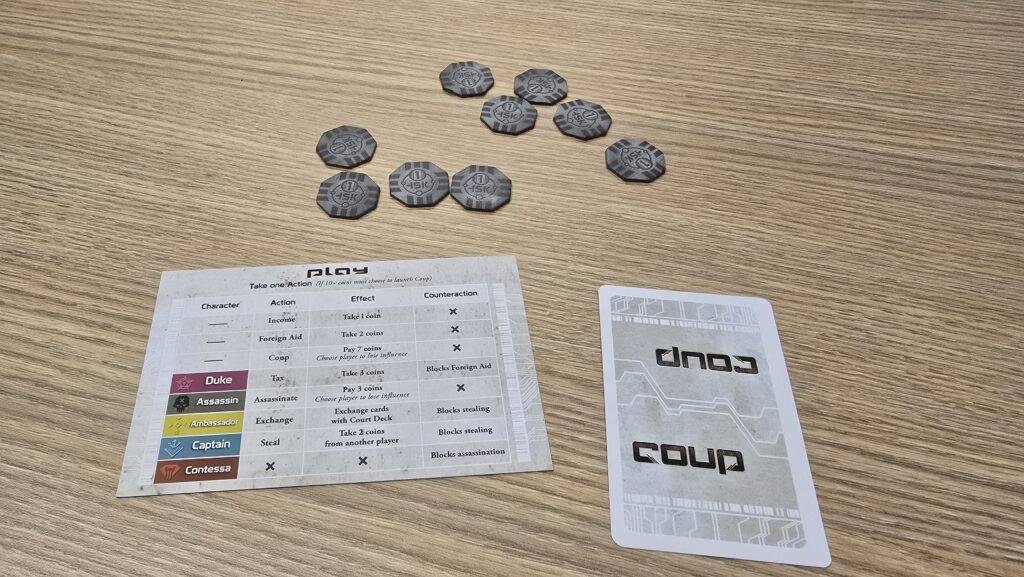
[Figure 2. Picture of me after collecting 9 coins. I was attacked shortly after.]
Our team really liked Coup’s free-for-all format, which is unlike most social deduction games where players win as teams. We wanted to keep that individual competition while restoring the cooperative and deceptive dynamics of social deduction games. To this end, we modified the game’s mechanics and formal elements (objective). First, we removed player elimination mechanic entirely. No one is knocked out mid-game, and everyone plays until someone meets their win condition. Second, we replaced the single survival objective with role-specific goals. Players win as soon as they meet their win condition, which differs between each role. For example, the Coconut Crab wins if it holds exactly ten small shrimps (shrimps are resources in our game that acts as currency), while the mother shrimp must hold more than two shrimps of every size (small/medium/large). To preserve the hidden identity aspect of social deduction games, we also added the Narwhal role, whose win condition is to correctly guess every other player’s role before declaring victory.
We found that our modifications successfully brings back the cooperation dynamics of social deduction games. Even though our game’s objective is free-for-all, it is critically important to find out what roles the other players hold – because if someone is close to their win condition, others must thwart their progress. Thus, players actively cooperate to collect and share information, deducing each other’s identities together. That collaborative deduction is precisely the fellowship aesthetic that Coup fails to produce. I was able to confirm these dynamics and aesthetics during a playtesting session with my teammates. I was playing as the Narwhal and wanted to appear as the Coconut Crab. I deliberately traded a large shrimp (which costs five shrimps) for four small shrimps — a move that wouldn’t make sense unless I was collecting small shrimps exclusively. The other players took the bait – they discussed it amongst themselves and concluded I was the Coconut Crab. While this incident was a successful deception on my part, it showed that players will actively pool observations to reach a shared conclusion in our game — which is exactly the cooperative dynamics our mechanics were intended to produce.
Coup’s lack of fellowship aesthetics is not coincidental — it is a direct consequence of its elimination mechanic, which undermines cooperative dynamics. When survival requires others to lose, everyone is an adversary, and the cooperation that defines the social deduction genre cannot emerge. Our game demonstrates that free-for-all competition and cooperative fellowship are not mutually exclusive. By replacing elimination with separate win conditions, we brought back the dynamics of cooperation and deceit that make social deduction games worth playing — while keeping the individual, competitive spirit of Coup.