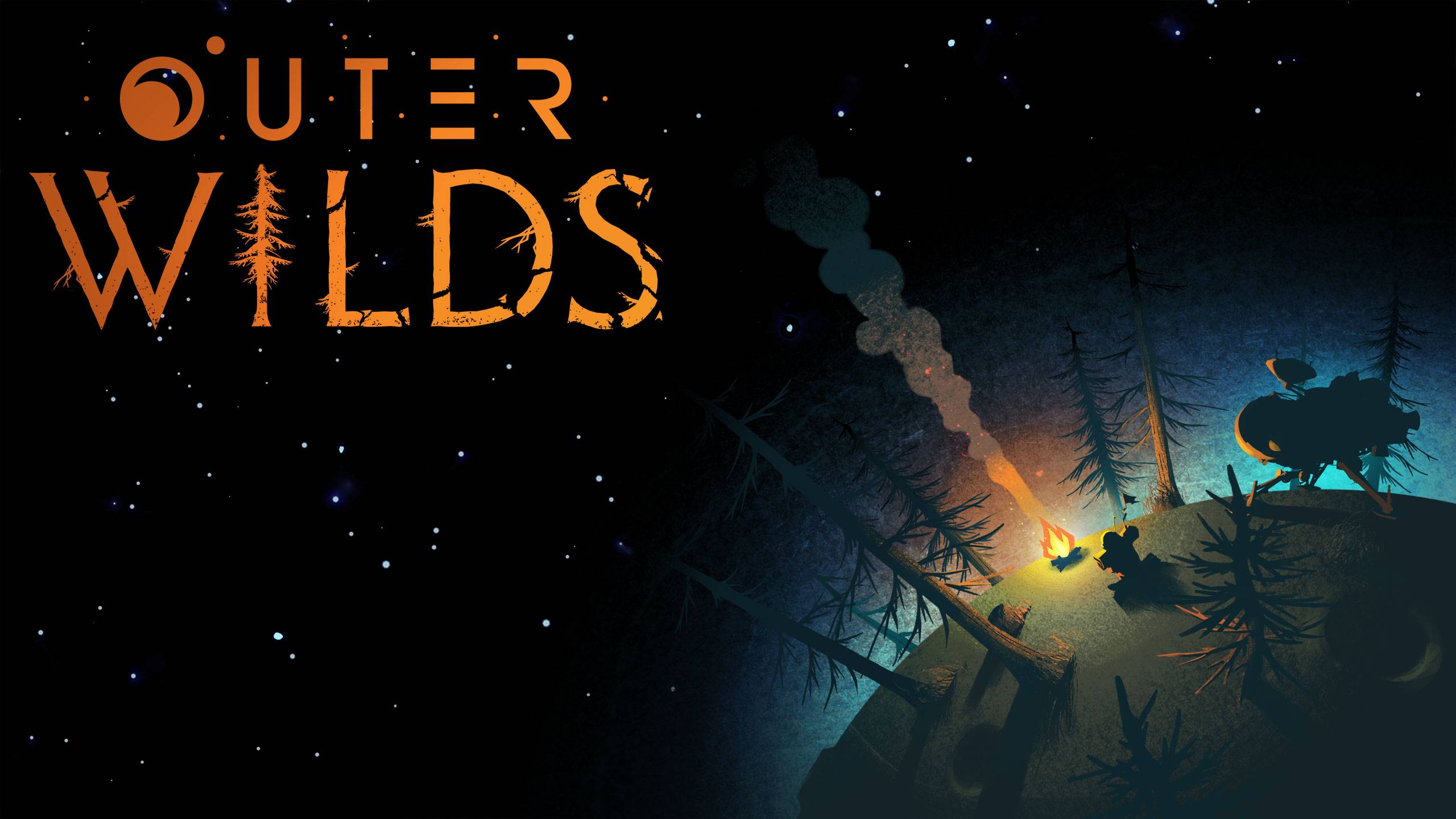
I have played many games. I have hundreds of hours logged on some of them, yet the game closest to my heart is one that I have less than 30 hours on. Outer Wilds is a game that you can only play once. It heavily relies on the aesthetic of discovery and narrative. In this short exercise I will specifically examine how the game constructs its aesthetic of discovery. Please note that there will be minor spoilers ahead.
Outer Wilds initially presents itself as a space exploration game. However, players will quickly find that they are in a 22 minute time loop where the physical state of the game will reset. The only thing that remains is what the player learns about the game’s mechanics and story. Thus, the resulting dynamic is that players must be very deliberate about how they explore the game’s solar system and its various planets. In the next loop, do I continue exploring the planet that I was on? Or maybe visiting a new planet will give me the insights that I need to solve another puzzle.
Additionally, players have a ship log that automatically records new pieces of information. The information is stored in a graph that shows how different entries relate to each other, and entries are marked with a question mark if there is more related information to be found. It is important to note that this ship log persists through loops. This removes the burden of having to keep track of all the information players discover. Instead, it allows players to focus on exploration and deriving insights from entries. It also allows players to more easily plan what they will do in the next time loop.