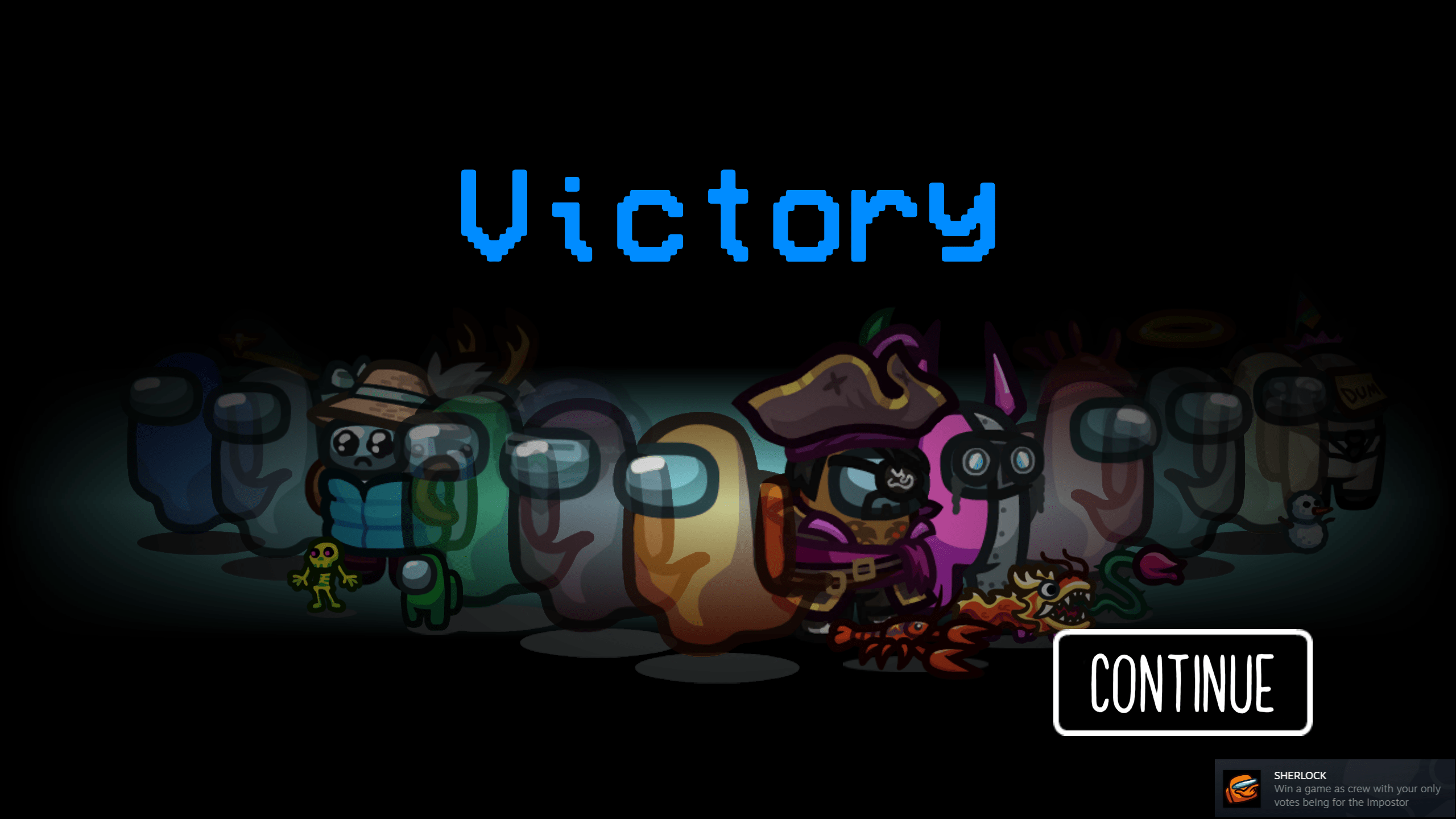
I played Among Us, published by American game studio Innersloth, with seven friends and some random strangers on PC. I think this is an excellent social game that offers primarily Fellowship and Challenge as its core types of fun. It works well not only for friend groups who already know each other well, but also for new acquaintances looking to break the ice, and even for total strangers who don’t know each other at all.
Among Us is a bluffing-based and unilateral game of deduction where players are either Crewmates who try to complete tasks and find the Impostors, or Impostors who try to kill Crewmates without being caught. Communication is crucial in this game since each round includes meetings where players discuss suspicious behavior and vote someone off.
What I noticed most clearly while playing was how my communication style changed depending on who I was playing with. When playing with friends, I participated much more actively in the discussions, whether I was a Crewmate or an Impostor. The tone was more relaxed, and we treated the game as a fun way to pass time together, not a competitive challenge.
However, when I played with strangers, I became more cautious and observant. I didn’t jump into accusations or lead conversations. Instead, I listened closely, remembered movement patterns, checked the security cameras, and shared information only when I was confident about what I saw. This mirrors how I behave in real life: in unfamiliar environments or new groups, I tend to listen first and read the room before offering my perspective. But in familiar spaces, I feel more comfortable being expressive and taking initiative.
These behaviors were also not just personal tendencies. They were also heavily shaped by the game’s mechanics and structure. This game creates two distinct phases, including silent movement around the map, and short bursts of discussion after a body is found or a meeting is called. Because communication is time-limited and often high-stakes, players feel pressure to speak quickly and convincingly. This structure encouraged me to hold back during meetings with strangers unless I had solid information, since I didn’t want to waste time or draw suspicion. The absence of a microphone in the game also forced me to rely more on logic and movement tracking. When I played with friends, we used Discord to communicate, the pressure felt lower, and the mechanics became a space for casual conversation, allowing me to speak more freely and engage playfully with the group. In both cases, the game’s format amplified certain aspects of my communication style and revealed how context-sensitive my behavior can be in group dynamics.
I think the way to include both free movement and discussion is a very effective design choice. This rhythm allows different types of players to engage in ways that suit their communication styles. For example, during the movement phase, observant players can gather useful behavioral clues without needing to speak, which is exactly how I felt comfortable contributing in unfamiliar groups. Meanwhile, the discussion phase rewards assertiveness and social intuition. This dual structure allows both analytical and socially expressive players to find meaningful roles in the game.

Another clever mechanic that improves the overall player experience is how dead players still have a role in the game. A ghost Crewmate can continue completing tasks to help their team win, while a ghost Impostor can keep creating obstacles for the Crewmates. This design minimizes the feeling of exclusion that often happens in this kind of game, like Mafia or Werewolf. It helps keep everyone engaged in the game.
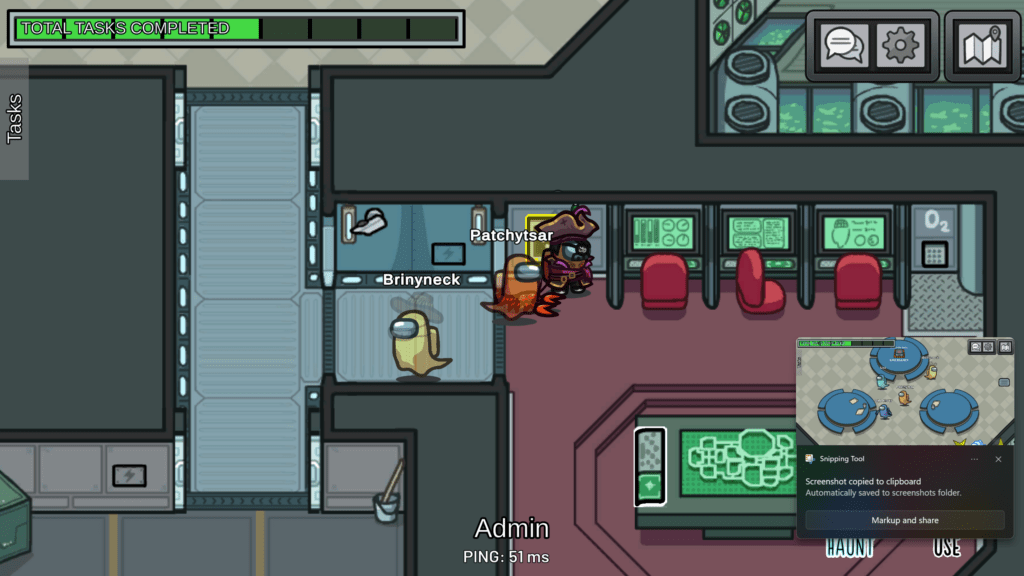
However, from my point of view, there are still a few areas where the game could be improved. One is voice communication during meetings. Currently, the in-game chat only allows typing, and if players want to talk, they have to use a third-party app like Discord. Since meetings are time-limited, typing can be inefficient. When everyone types at once, it’s easy to miss important information. Players who type slowly or aren’t confident in social deduction can also be easily overlooked. Also, I think it will be better to introduce a structured speaking order during meetings. For example, the person who calls the meeting could assign the order. They might ask specific people to speak first, especially those they suspect. This would reduce chaos and ensure everyone gets a chance to speak. When I played with my friends, we initially all talked at the same time, which wasted a lot of time. Later, we decided to take turns speaking in order, and it made discussions more efficient and fairer, helping us make better decisions.

The biggest difference between Among Us and other bluffing games is that it combines mechanical gameplay with social deduction. Most bluffing games are purely conversation-based, while in Among Us, we can gather evidence by observing how players move, whether they fake tasks, or how they behave around others. This gives players who are less confident in verbal deception more ways to participate and influence the game. Its core mechanics, like sabotage, tasks, and emergency meetings, lead to rich game dynamics that create layers of strategy that go beyond words. This blend of physical interaction and social gameplay gives it broader appeal and more options for different types of players.
In most real-life situations, lying is considered morally wrong because it breaks trust and can lead to harm. However, I don’t believe that lying in a game like Among Us constitutes a wrong action. This is because gameplay happens inside the “magic circle”, which is a shared, temporary space where players agree to suspend real-world norms and adopt new roles and rules. Within this space, deception is not only accepted but expected as part of the experience. Lying in this context becomes a strategic tool, not a moral offense.
However, my experience with Among Us also showed that the boundary of the magic circle isn’t always perfect. In one game, one of my friends convinced the other to trust him by saying, “I would never lie to you,” even though he was actually the Impostor. After the game ended, the person who had been deceived felt genuinely upset. It wasn’t just the lie that hurt — it was the fact that it used emotional trust from their real relationship, rather than in-game logic, to win. This made me realize that while the game allows lying, the emotional impact can still feel very real, especially when players blur the line between in-game roles and real-world connections. Players have a responsibility to protect the social atmosphere, not just by following the rules, but by being thoughtful about how they lie. I believe it’s more respectful to persuade others using logic and gameplay evidence, rather than emotional manipulation.