Reading Notes: Rhetoric Of Video Games – Leytht
I think The Stanley Parable: Ultra Deluxe‘s intended audience is people interested in the more narrative elements of video games. The original game though, I think was intended for people who like video games, but also have jobs they perhaps don’t enjoy as much. Ultra Deluxe doesn’t require any complex inputs, and even has ways to reduce the complexity of inputs further, which makes me think it was intended for a wider audience than the original 2013 version. The original game was made by Davey Wreden, and actually started its life as a Half Life 2 mod, this indicates to me that this game was really just intended to convey its message, and not to have the critical acclaim and fame it ended up having. Ultra Deluxe was made by Crows Crows Crows, and came out in 2022.
This game is probably best classified as an adventure game, but I think in maybe a less traditional way. In this game you don’t necessarily go on some grand quest, but instead sort of explore the possibility space created by the game’s narrative. Each time you play the game you are given so SO many choices, but they aren’t like yes or no choices, they all have to do with the environment the game is placed in. For example, one of the first big choices you have to make in the game is if you want to go through the left door or the right door. On its face this seems inconsequential, just dictating where your character physically goes, but, beyond the environment there’s another unique aspect of this game, the narrator. The narrator in this game is a character themselves, and they narrate the game as a book would be narrated, in the past tense. When we get to the room with the two doors, the narrator says “Stanley walked through the left door”. This makes the decision not just simply about where we walk, but also defines our relationship with the narrator as a character.

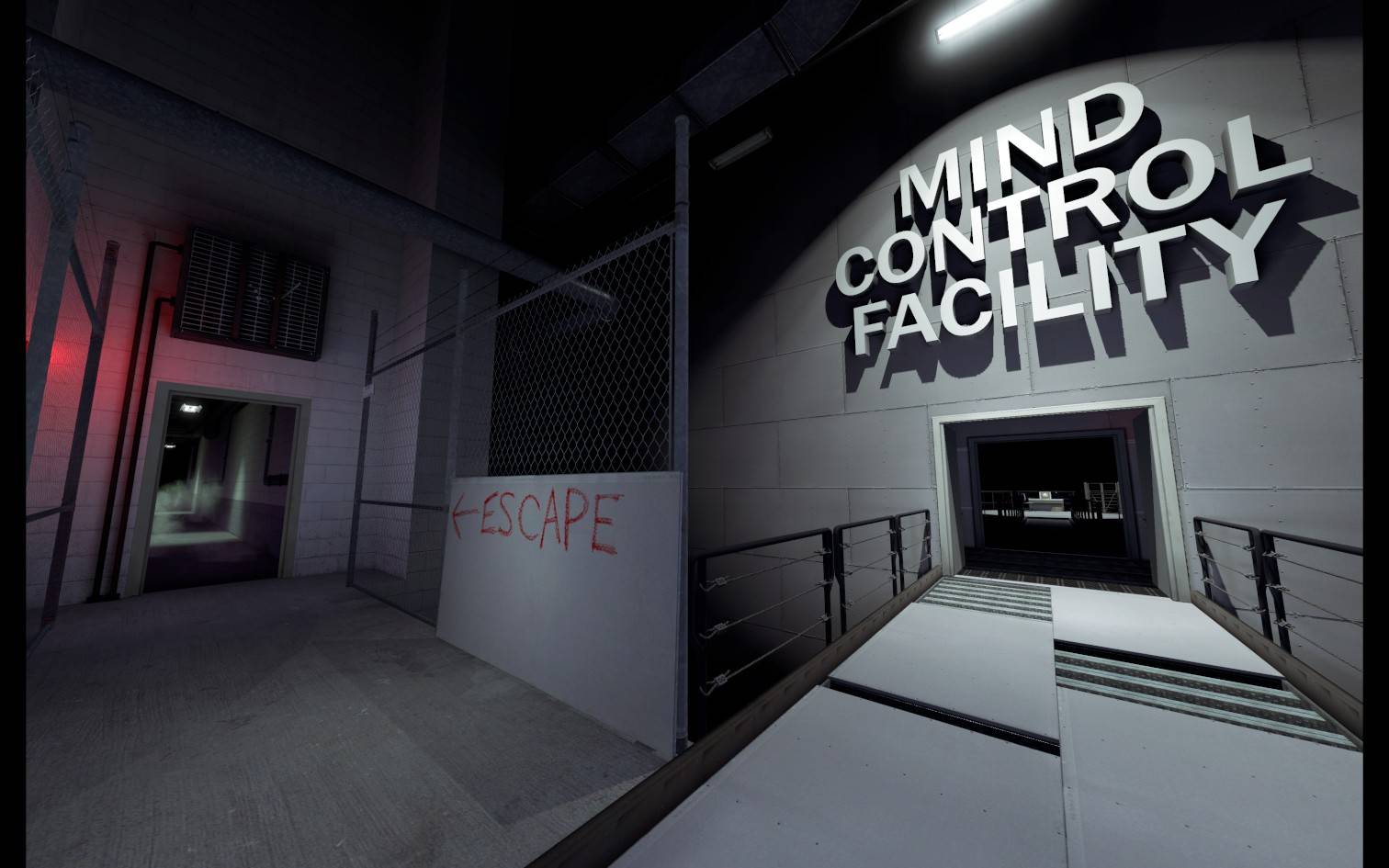
If we disobey the narrator he gets more and more upset until he eventually kills us. Another interesting thing is the way time is treated in the game. At one point in the game there was a choice between going down an “escape route”, or going through the door the narrator tells us to. I don’t want to spoil too much, but after making this choice the first time, I reached an ending and wanted to see the other route. I ended up rushing through, and upon putting a code into a keypad super fast, the narrator got upset that I wasn’t waiting for his dialogue. This moment is the one that made me realize just how much of this game I hadn’t seen yet, the idea that the speed at which we do things matters is one that narrative games like this don’t often implement, and I found it really cool.
I think one thing in the lecture we talked about that is especially apparent in this game, is environmental story telling again, but as opposed to just being an environment that has a story embedded within it, the environment along with the narrator really feel like characters in an interesting way. This idea of an evolving world really inspired me, and I hope to implement something similar in my game. The idea of the order we do things in/the speed with which we do things matters is also something that I hope I can communicate with my own game. (Although, I’m not sure I’ll have time to implement it all before friday haha)
The message of this game is something that I think is really important in our current time. It really feels like it’s trying to tell us something about work. The game really reinforces the idea that if we stay in this boring job we don’t love but we don’t hate that we will die. I don’t think the game is trying to say that we will physically die if we work here, but that something about us will die. Our creativity, our passion will be what ultimately dies. I don’t really think that this is just about work in the traditional job sense though, I think it is also talking about what we do in our free time. I think about video games that I’ve played over the years that feel like clocking in to a job instead of being fun in their own right. Games like Destiny 2 or World of Warcraft that demand you spend hours and hours doing menial work, in order to get a slight bump to your stats, feel very similar. These kinds of games control us in a way, making us spend our days doing things we don’t even really want to be doing. I think this game’s message is really enhanced by the existence of AI in the world today. Humans are forced into menial tasks, while we let the computer create “art”, humans slowly have their creativity replaced with the unfeeling, unthinking, unexplainable work created by machines. I think the game’s character Stanley really feels like a character stuck in one of these menial jobs. The game begs the question, should we continue being “mind controlled” or should we go our own way and escape, despite the consequences society tries to impose on it.