

Created by Eric Barone, Stardew Valley is a fan favorite game for players seeking relaxing, community-focused gameplay that emphasizes relationships and personal growth. You can play on Windows, MacOS, Nintendo Switch, XBox, and PlayStation, but I opted for Windows gameplay.

What does it mean to play Stardew Valley as a feminist? It means recognizing the game’s radical departure from traditionally masculine gaming narratives of conquest and competition, instead embracing “ethics of care.” Stardew Valley positions emotional labor, community building, and nurturing relationships not as secondary gameplay mechanics, but as the core victory conditions. In doing so, it challenges the traditional gaming paradigm that prioritizes individual achievement and dominance.
Compared to many popular games, Stardew Valley is unique in that success is measured not by defeating enemies or accumulating power, but by fostering connections, supporting community members through their struggles, and creating sustainable relationships with both people and the environment. This aligns with feminist theories that value collaboration, empathy, and collective well-being over hierarchical power structures.
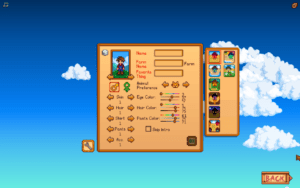
Stardew Valley excels in several areas that align with feminist gaming principles. For example, the game completely eliminates gender restrictions on activities and roles. Your farmer character can engage in traditionally masculine activities like mining and combat, or traditionally feminine ones like cooking and flower arrangement, without any mechanical differences based on gender presentation. This design choice disrupts the gender essentialism that pervades many games.
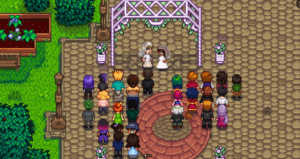
The relationship system particularly shines from a feminist perspective. The game offers same-sex marriage options without fanfare or special mechanics—queerness is simply normalized within the game world.
The game’s emphasis on emotional labor as gameplay also deserves recognition. Remembering birthdays, giving thoughtful gifts, and listening to townspeople’s problems aren’t just side activities—they’re core mechanics that drive progression. This validates forms of work traditionally performed by women and often invisible in both games and society.

Despite its strengths, Stardew Valley falls short in several key areas where feminist theory could enhance the experience. The game’s character diversity remains predominantly white. This limitation reflects single-axis thinking—addressing gender while neglecting race and other identity markers.
The “bachelor/bachelorette” marriage system, while inclusive of same-sex relationships, still reinforces monogamous, romantic relationship structures as the ultimate goal. A truly feminist approach might explore alternative relationship models, chosen families, or simply validate the choice to remain single without penalty.
Examining Stardew Valley through an MDA framework reveals how its feminist potential is both realized and constrained. The game’s mechanics prioritize gift-giving, conversation, and community center restoration—activities that create dynamics of reciprocity and mutual aid rather than zero-sum competition.
The aesthetic experience emphasizes connections and bonding, with the emotional resonance of small, caring actions. Watering crops becomes meditative; fishing offers contemplative solitude; festival participation builds collective joy. These aesthetics challenge the adrenaline-focused design of many mainstream games.
However, the marriage mechanic’s end-state (moving in together, having children) reflects heteronormative life scripts that feminist theory would interrogate. The game could benefit from more diverse relationship trajectories and alternative definitions of partnership and family.

To more fully embrace feminist gaming principles, Stardew Valley could implement several improvements:
- Expanded Identity Representation: Include more characters representing different racial, ethnic, and cultural backgrounds, with storylines that don’t center their marginalization as their primary narrative purpose.
- Alternative Relationship Models: Allow for polyamorous relationships, chosen family structures, or deeper non-romantic partnerships that carry equal mechanical weight to marriage.
- Economic Justice Themes: Address the game’s capitalist underpinnings more critically—perhaps through cooperative farming options or critique of JojaMart’s corporate exploitation.
- Accessibility Improvements: Better accommodate disabled players through customizable difficulty options and alternative input methods.
Stardew Valley represents significant progress in feminist game design, particularly in its validation of emotional labor and rejection of violent conflict resolution. Its emphasis on community care and environmental stewardship creates space for players to experience gaming through what feminist theorists call an “ethics of care.”
However, the game’s feminist potential remains partially unrealized, constrained by assumptions about normative relationships, limited diversity, and individualistic solutions to systemic problems. By embracing intersectional feminism more fully, future iterations could cultivate even richer soil for diverse players to grow meaningful virtual lives.
The game succeeds in proving that nurturing mechanics can be engaging and rewarding, challenging industry assumptions about what makes games “fun.” In doing so, it plants seeds for a more inclusive gaming future—one where care, community, and cooperation aren’t just side quests, but the main adventure.