This week, I playtested A Dark Room, a web-based game created by Michael Townsend in May of 2013. The game was later adapted for iOS devices by Amir Rajan (I playtested on my computer.) The ESRB and other platforms seem to determine that the game is suitable for ages 10 and up, although iOS rates the game appropriate for ages 12 and up. I think I might agree with the age rating of 10+, although I do see why iOS might rate the game more appropriate for ages 12+; there are elements of violence in the game, not only against animals, which is usually framed as a need for survival, but also against humans: some hostile, but there are other instances where the violence is unnecessary. While these violent moments are not graphic (the game is entirely text-based, and descriptions of death and violence lack detail), the game might be, as a result, more ideal for an older audience that might fully understand the violence. Overall, the game might be best categorized as a resource management game with an embedded narrative that can run in the background. Enjoyers of books and narrative, resource management, as well as a more slow-paced game might appreciate this game. However, because of the lack of visuals, the game might not be suitable for players with a strong love of graphics.
A Dark Room is an interestingly unique example of world-building; typical world-building games might involve strong graphics. A Dark Room, however, while being minimalistic and almost entirely text-based, still succeeds engaging the players in its world with world-building, largely through its air of mystery, given its minimalism and the lack of crucial details, such as descriptions of the main characters, its mechanics that lend themselves well to exploration, and its environment and settings.
Pereira’s “The Psychology of World Building” first and foremost focuses on the characters— the primary layers of world-building. For example, she argues that the “main character anchors your story and gives your world a point of focus.” A Dark Room, however, has no description of the main character that the player is playing as; even in the text logs, it seems that the player does not exist, as each phrase is stripped of the subject. For example, if the player runs out of water in the game while exploring the world, instead of the text saying “You are dehydrated, thirsty,” or “You faint,” the text simply describes the surroundings and the consequences of the players’ actions: “there is no more water.” Then: “the thirst becomes unbearable” and “the world fades.” As a result, the player is incentivized to explore for hints of who the character they are playing are is. A Dark Room succeeds at world-building, ironically, from the omission of several conventional world-building elements.

Figure 1: Running out of water after exploring
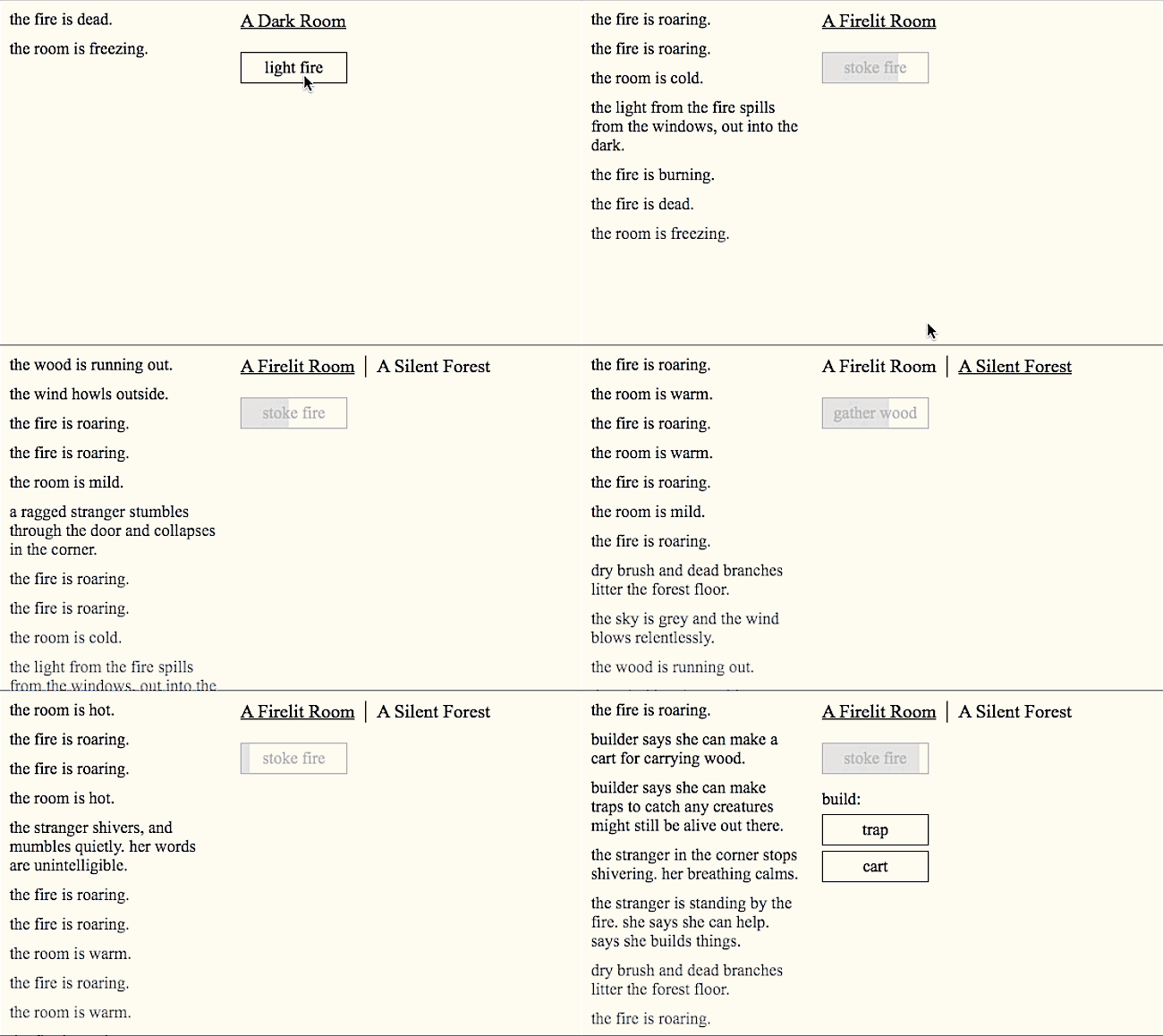
Even from the very beginning, there is no description of the self, or even the “builder” that accompanies you throughout the game. The game begins with a cold room, and a singular button: “light fire.” Once you light this fire, there is an option to stoke it. There is only the transcribed feedback to the player’s actions (for example, each time the player clicks “stoke fire,” the text will reflect their actions, resulting in “the fire is burning,” “the fire is roaring,” and/or descriptions of the room’s temperature (mild, warm, hot.) However, there is no description of the player themselves.

Figure 2: stoking fire
Near the start, there is also a description of a stranger who collapses into the corner of the room. This stranger soon is referenced as the “builder,” who gives hints throughout the game (for example, hinting that building huts will draw people in, or helping to stoke the fire when you’re negligent.)
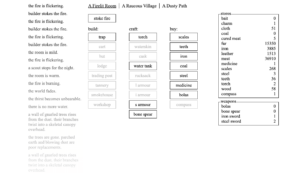
Figure 3: “builder stokes the fire”
Who are these characters, and who are you? A Dark Room takes advantage of this ambiguity, turning the characters into a point of mystery, which results in the players’ curiosity in uncovering a potential embedded narrative.
A Dark Room nevertheless does incorporate traditional elements of world-building into its game: through settings and environment (although perhaps, from its lack of visuals, unconventionally.)
These simple settings: a room, a village with huts, a trading post, a tannery, coal mines, and abandoned towns discovered from the path— the architecture is accessible to all players, which effectively nudges players towards concepts they are already familiar with (as learned in the Game Architecture article.) As a result, despite lacking graphics, A Dark Room is able to borrow existing concepts to immerse players in a world of building and settlement.
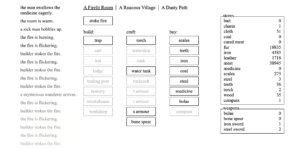
Figure 4: Familiar items able to be built, traded, as well as familiar items in the inventory. Village and path, the game’s other settings, accessible on the top.
The text also paints pictures. For example, while exploring the path, there are moments when you might venture to a place that prompts the text “the trees are gone. parched earth and blowing dust are poor replacements” or “the barrens break at a sea of dying grass, swaying in the arid breeze.” Although there are no visuals, the player can imagine these scenes, which is evidence of how the game succeeds at creating visuals with its text.
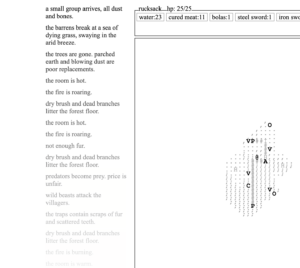
Figure 5: Scenes described through text
Additionally, A Dark Room‘s mechanics of clicking various buttons, which allow the player to unlock new items to be traded, as well as new settings, contribute to the world-building and the player’s investment in the narrative. The forest, for example, transforms into a village once you build your first hut, and the label transforms from a small village, to a modest village, to “A Raucous Village” as more huts are built and the village is expanded. “A Dusty Path” is also unlocked with the purchase of a compass, which is unlocked with the building of a trading post.
This exploration leading to further exploration allows the player to unlock more and more hints of narrative, which effectively draws the player in; the game creates interaction loops of discovery and learning. For example, venturing on the “Dusty Path” allows one to encounter various beasts, deranged humans that attack the player, as well as soldiers from abandoned establishments, as well as alien remains, at one point. These pieces come together to ultimately hint towards the overarching narrative— the idea that the player themselves may be an alien that landed on earth. (I wish, however, that the game— as in “interaction loops”— gave the player more feedback on what happens when the world “fades” or when the player runs out of food, water, or health on the “Dusty Path”; it took me far too long to realize that progress can be saved if one returns to the village without the world “fading.”)
Although A Dark Room, with its minimalistic design and lack of detail, effectively avoids racial traits, besides making clear the existence of monsters, men, and aliens, A Dark Room does run into the issue of implied colonization, and perhaps even slavery, through its established world of settlement. Although the families that take refuge in the huts seem to be benefiting from the shelter that you have built, in return, they seemingly provide the player with free labor. At first, I thought that they might be at least taking resources from the player in exchange (e.g. eating cured meat), but besides the coal miners who do consume food in exchange for material, most villagers simply consume the materials needed in their work (e.g. fur in exchange for leather), or, in the case of hunters, supply new meat and fur for free, every ten seconds.
Additionally, there was one startling moment when, in order to unlock the coal mine, the player must kill all of the three existing miners, including a “chief.” Although lacking descriptions, this idea startled me, as it seemed like explicit colonization, whereas the iron mine was unlocked by clearing out monsters, which felt more like traditional “settlement.” Now, however, we were killing “other” humans (“other” being in quotes— because interestingly, it is unclear what “race” the player is until the very end, with the theory that they were originally an alien.)
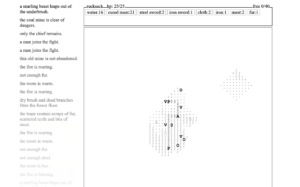
Figure 6: The murder of the coal miners to unlock the coal mine. The message: ““the mine is now safe for workers” implies so much, and also parallels the message when the iron mine is cleared of vicious, attacking monsters. The game seems to be drawing a parallel, from the player’s perspective, of colonization, between people simply previously inhabiting a space, who the player chooses to attack, and violent monsters that attack the player first, which upon defeating, makes the space “safe” for “workers.”
It seems that A Dark Room thus runs into the issue of a different ethical issue, despite being one unrelated to race. A bit shocked, I did a deep dive on endings, and I found a secret ending on the mobile version (unsure if the ending is available on the web version.) Apparently, there is a “no huts” run in which, if the player never builds any huts (and so no villagers ever come to live in the huts), the builder accompanies the player on the final spaceship scene, and instead of the player dodging the falling letters, the builder ultimately begins to help the player with telekinesis. She says goodbye, however, and chooses to strain herself to death, as she begins to apparently internally bleed. It is obvious that the builder is not human, then, but the player is nonetheless (without a choice) benefiting at the cost of someone else’s life.
Zooming back— if the player is indeed an alien, this could be a broader message on colonization, and how usually the colonizers are “aliens” to a certain country, yet feel the right to take advantage of the people already living there— whether it be through free labor, or through violence in order to gain materials, territory, or other benefits (e.g. the slaughter of the coal miners.)
However, I wish that the game brought this idea of colonization up more clearly, or adapted the “no huts” secret ending on web— it seems that there is so much room for deep messages and narrative. As it stands now, the game simply ends with the player going into space, the screen fading to black, and ending with the player’s score (unsure of how it’s calculated.) It seems that the narrative is up to much interpretation to the player, which I don’t necessarily dislike, as it seems like an intentional design choice. Even so, I think that with more explicit narrative surrounding ideas of the implied colonization, the narrative and game itself would have been much stronger.