During our group meetings, the word “Mafia” was thrown around a good deal. I was smiling and nodding, but I didn’t really know what Mafia was. I garnered that it was some sort of card game that had a similar elimination mechanic to the Mark of the Witch game we were trying to flesh out. It seemed like a card game so common that everyone had played it at some point and assumed everyone else had done so too.
Clearly I was severely uncultured and had been living under a rock. So I decided to brush up on my pop culture and play Mafia. Thankfully there was a deck of cards in my dorm’s lounge as well as some Mafia-enjoyers who were more than willing to play a couple rounds with me and show me the ropes. Mafia is a card game with a social deduction component. Interestingly enough, it was made by another college student: Dmitry Davydov—a psychology major at the Psychology Department of Moscow State University. The first versions of Mafia that Davydov went about as viral as viral could be for an undergrad in Spring ‘87 in Russia, being played in classrooms, dorms, and summer camps all over Moscow University. Mafia feels like a game that targets teenagers and adults. I think one would have to be able to understand the dynamics of deception and deduction to both truly appreciate and enjoy the game.
I draw a number of similarities between Mafia my team’s Mark of the Witch concept. There’s the whole hidden roles element to the game. Both Mafia and Mark of the Witch assign player’s secret roles (Mafia vs Townfolk in Mafia, Witch vs Villager vs Martyr in Mark of the Witch). It’s up to the players to figure out who is who.
The overlying theme of social deduction would probably be the largest similarity since it’s at the heart of the game mechanics for both of these games. Players have to argue and bluff, sneak around and read the subliminal to figure out who’s on which side. This reminds me of the sketch-notes we had on reciprocity from Game Design Patterns for Building Friendships that we did earlier on in class. There’s shared goals, shared experiences, a joint journey, collaborative efforts. Both games tick a lot of boxes in the reciprocity category. There’s also a proximity aspect, the trial event builds community, even though it’s divisive.
In both games, players vote to eliminate someone they suspect is evil, be they a mafia member or a wicked witch. There’s a trial-like process in which players cast their votes to determine the direction of the game as a whole.

Victory conditions are based on team survival: The villagers/townsfolk want to get rid of the opposing team (Witches/Mafia). The bad guys win if they outnumber the good players. There’s also a period where the accused gets defended or attacked before votes (similar to Mafia’s defend yourself” phase).
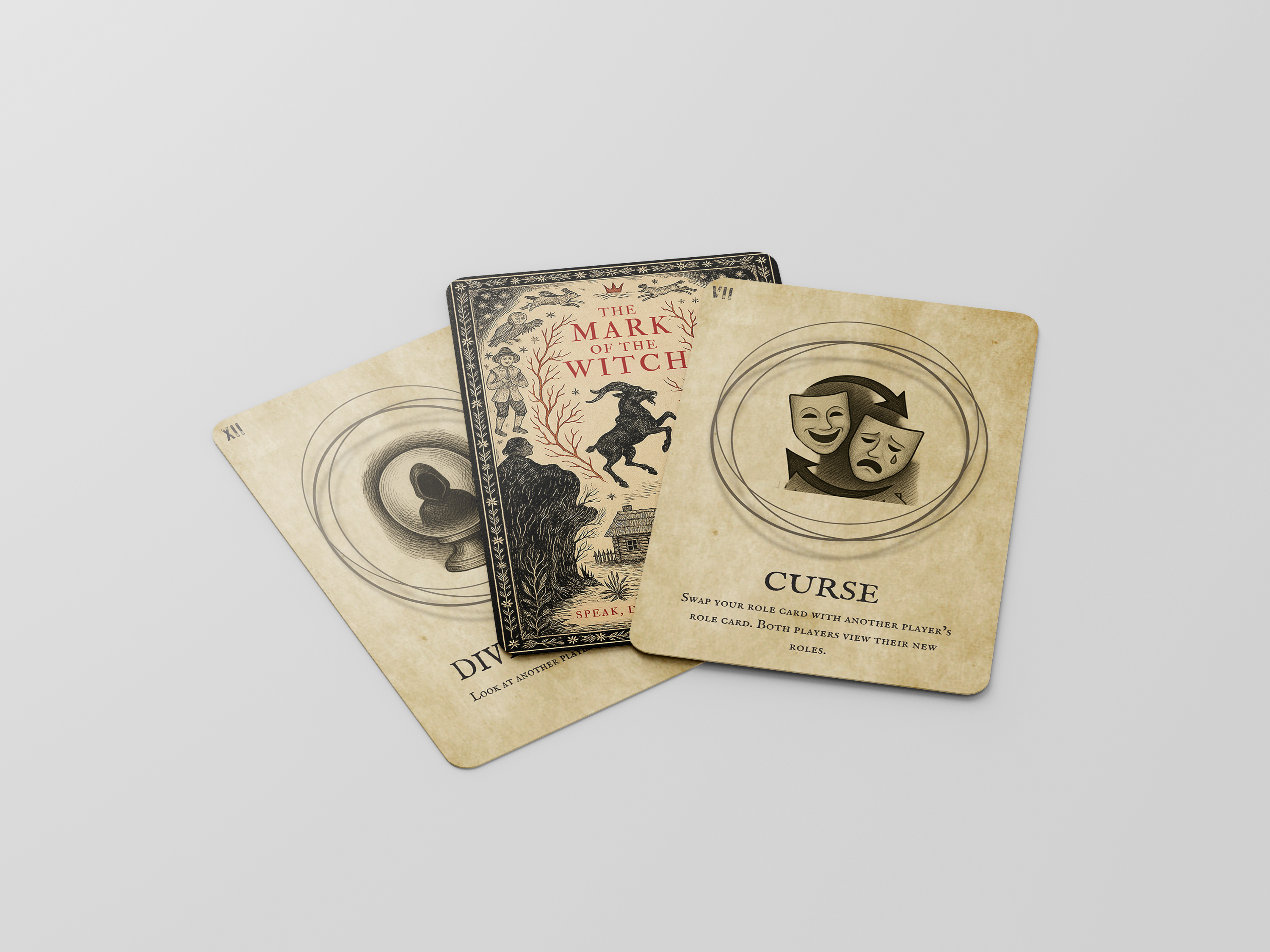
As for differences, Mafia operates on a different time frame than Mark of the Witch, with day and night phases. Mark of the Witch is continuous. There’s also no role swapping in Mafia. This isn’t the case with Mark of the Witch, there’s a curse spell that allows for role cards to be swapped. You might start as a villager but become a witch later. Some roles have abilities in Mafia. The doctor saves, the cop investigates, so on and so forth. Players have strategic actions every turn using spell cards to get information, protect themselves, swap roles, force trials, etc.
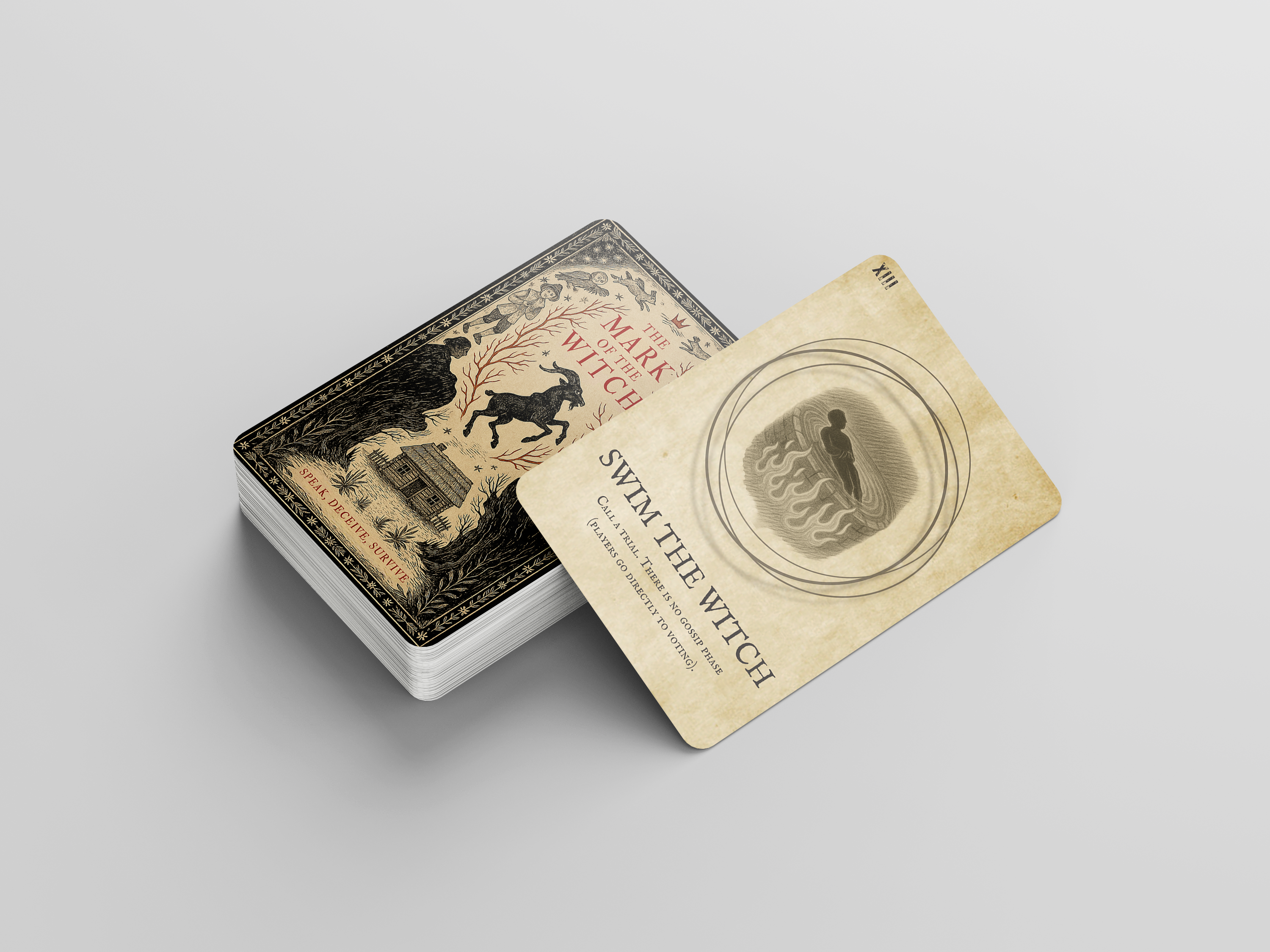
Mafia is about slow-burn social deduction and incorporates group conversation. Mark of the Witch is faster paced, with role manipulation and strategic turns making it a little bit more unpredictable, but in a way that keeps things exciting.