Walking simulators take a different approach from traditional video games, which often include fast-paced action and violence. These games ask players to slow down and pay attention. Journey is a perfect example of a walking simulator that was developed by Thatgamecompany. The game was originally released for PlayStation 3 and now available on PS4, PS5, PC, and iOS. Journey invites players into a quiet, mysterious world where walking is how the story is told.
From the moment the player begins, Journey taps into a deep sense of wonder. The game opens in a vast desert, with a glowing mountain shimmering far in the distance. There is no dialogue, no character exposition, and no traditional tutorial—just a few simple prompts that explain how to walk and adjust the camera. As the player walks, slides down sand dunes, and climbs through ancient ruins, the story slowly begins to unfold through visual cues and environmental design, offering subtle insights into a world that has long since fallen.
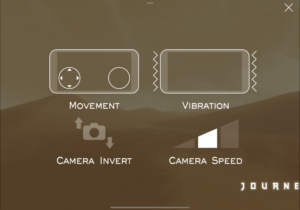
The only mechanics available in Journey are movement, jumping, gliding, and singing. There is no map, no quest log, and no spoken language. Aside from the brief introductory instructions, the game presents no English text. Everything is communicated through visuals, music, and intuitive design. The player learns through experience—realizing, for example, that walking down a hill leads to sliding, or that singing can activate mysterious glowing glyphs. Singing also recharges the character’s scarf, enabling brief moments of flight. Each discovery emerges naturally, making progress feel personal and deeply rewarding.
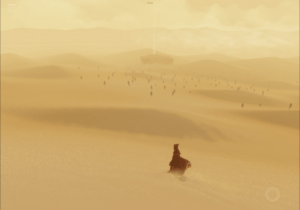
This game appeals to its players’ emotions by communicating through wordless communication. Murals between levels tell the story of a lost society. The architecture makes the player feel small, like they’re walking through a sacred place. At the end of each level, the character kneels before a glowing figure before moving through a portal to the next stage. It’s vague but powerful, feeling like an emotional dream you don’t fully understand. Music plays a huge role in the gameplay as well. It builds as you get closer to completing a level. When you capture floating red cloths or reach a new area, the music volume increases. It’s signaling to the player that they’re doing something right. The signal is not explicit through language, but through sound and visuals.

Most video games involve some kind of violence. In games like The Last of Us, players have to kill to survive. The story is about protecting yourself and others through force. That works for some stories, but Journey goes in the opposite direction, which is what makes it stand out. There’s no violence in Journey. That design choice made me think about how most games equate challenge with conflict. Journey challenges you emotionally. It’s not about beating someone. It’s about finding your way and experiencing an emotional story. It’s a quiet critique of the idea that violence is necessary for excitement or meaning.
The game isn’t for everyone. Some players might feel lost or unsure of what to do, especially at first. Adding a gallery of the murals or more visual hints could help new players connect more easily without removing the mystery. Additionally, the game’s achievements, such as finding all the glowing symbols, can feel less satisfying to players who are used to fast feedback and instant rewards. Journey asks for patience and quiet attention, which might not appeal to those looking for quick gratification. But for those willing to slow down, its emotional payoff is subtle and deeply personal.
Unlike other walking sims like Firewatch or Gone Home, which rely on voice logs and written notes, Journey is wordless. That can be freeing, but also frustrating if you like clear stories. It’s a more abstract experience, and appeals to a specific audience.
Journey proves that purposeful walking can be a powerful storytelling element in video games. It trades combat for connection, words for silence, and chaos for awe. The result is a game that doesn’t tell you what to feel, but gives you the space to feel something instead.