

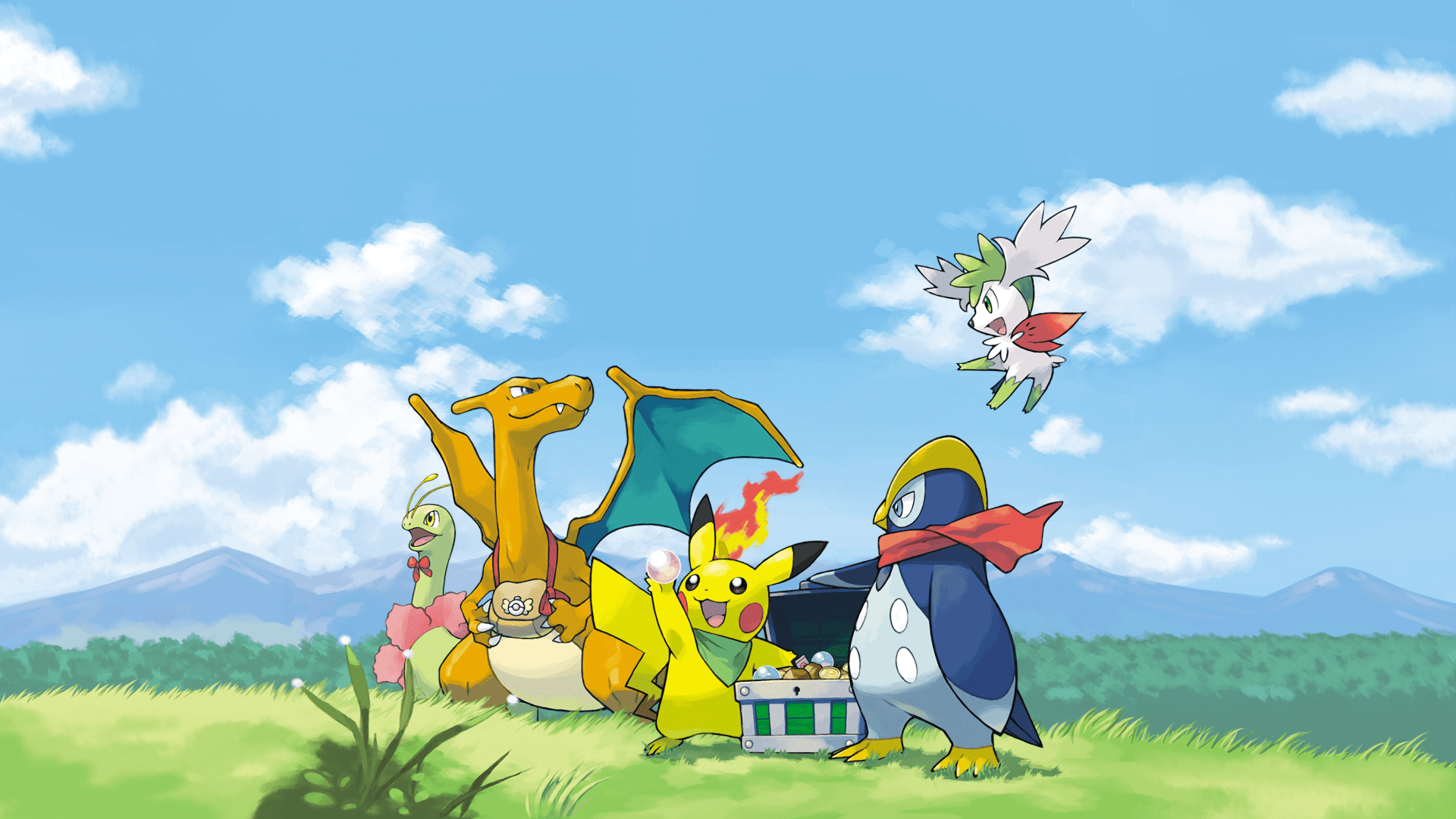
I spent a lot of my early childhood playing video games, but there is one whose story and world has always fascinated me. That is why I was so excited for this week’s Critical Play, as it was an opportunity for me to revisit my all-time favorite game, Pokémon Mystery Dungeon: Explorers of Sky. This game was developed by Spike Chunsoft (just Chunsoft at the time) for the Nintendo DS. Coming back to it after all this time, I find that this game is great for anyone with at least a second grade reading level, meaning I enjoyed it just as much as 23 as I did when I was 8.

Pokémon Mystery Dungeon: Explorers of Sky is the third game of the Pokémon Mystery Dungeon: Explorer series, which is the second generation of the Pokémon Mystery Dungeon series, a spinoff game of the main Pokémon franchise. Despite being a spinoff series, I love these games more than their mainline counterparts. This is because I find that the PMD series does a fantastic job at inviting the player to care about the world through the way in which it breaks away from the mainline games’ approach to formal elements as well as its captivating and emotional narrative, which creates a world that feels truly lived in that players can become immersed in.
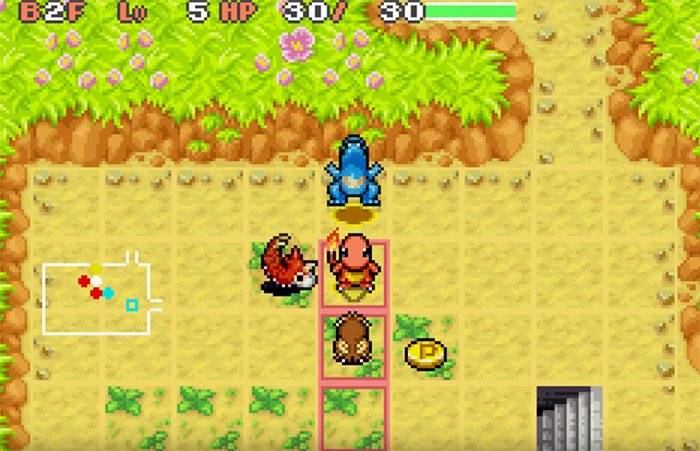
PMD’s core gameplay loop is a major diversion from that of the mainline series. In the mainline series, the player plays as a ten-year-old Pokémon trainer that is on a quest to become a Pokémon champion. This involves a core loop of Pokémon battles, capturing Pokémon and battling other trainers in mostly 1-vs-1 turn-based combat. On the other hand, PMD has the player play as the Pokémon themselves, exploring procedurally generated dungeons to complete various quest and missions while fighting against and alongside other Pokémon. Gameplay here is, in my opinion, more dynamic because while the mainline games focus on rock-paper-scissors style combat, PMD also has the player consider their position relative to other Pokémon.
Here, I find that PMD’s formal elements differ from the mainline series in two notable ways: players and objectives.
In terms of players, PMD has the players play as the Pokémon themselves. In the mainline games, the player is the Pokémon trainer, and the Pokémon feel almost like items or tools, used as a means to an end. Whenever I play the mainline games, I feel that it is much harder to form a connection with the Pokémon themselves. On the other hand, PMD does a much better job of allowing players to form those bonds with the Pokémon because the characters are the Pokémon. They talk and interact with one another, each with their own backgrounds, goals, and personalities. PMD treats Pokémon as people, not tools to be used and discarded. Alongside that, the relationship between the player and other Pokémon also feels different. In the mainline games, it feels very much like a single player, player vs. game scenario because the player is the trainer. But in PMD, because the player is a Pokémon, fighting alongside other Pokémon that each have their own agency feels more like a multiplayer, team vs. game sort of scenario, even though it is still ultimately a single player game.
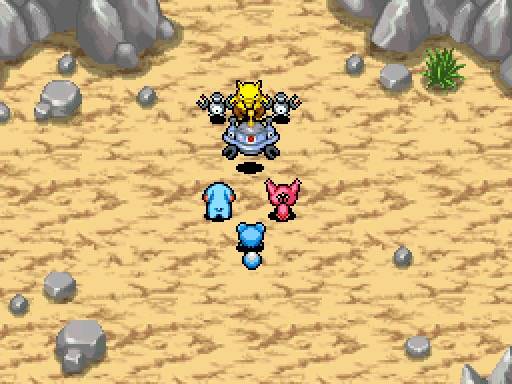
The second way I find that PMD changes the typical Pokémon formula regarding formal elements is its approach to objectives. In the mainline games, the objective is to become strong enough to become the Pokémon champion, so each Pokémon battle has the same objective—capture (defeat) your opponents to grow stronger. But in PMD, the objective can change depending on the dungeon the player is in and their quest for that specific dungeon. Sometimes, the objective is to defeat a certain other Pokémon (capture). Sometimes, it is to find a missing Pokémon (rescue). Sometimes, it is just to make it to the end of the dungeon (exploration). While the core gameplay loop of exploring dungeons remains constant, I find that the ever-changing objectives keep the game always feeling fresh.
Now, in addition to changes in formal elements, PMD also takes a radically different approach to its narratives compared to the mainline games, which typically involve the player waking up one day to embark on a journey to become the Pokémon champion while defeating any bad guys and nefarious plots along the way. This approach to storytelling is fine, but it is essentially the same story that they have been telling for the past twenty games. These stories are also meant to be more superficial since players typically come to those games for the creature-collecting and battling rather than a well-crafted narrative.
On the other hand, narrative is exactly what PMD does so well.

After a character selection via personality test, Explorers of Sky opens with the player waking up on a beach next to another Pokémon (who will eventually become the player’s best friend and exploration partner). They have no memory of who they are or how they got to where they are now. The partner Pokémon is introduced as a coward who dreams of becoming an explorer but has never been brave enough to try. But this chance encounter serves as a turning point for both as they decide to team up and become an exploration team, where you the player want to figure out your lost memories and your partner wants to become the person they have always wanted to be.
Already, PMD is leagues above the mainline series in terms of storytelling because it establishes this interesting relationship between the main duo, whereas the protagonist in the mainline series rarely ever has such a developed relationship with any of the other characters. In fact, in the mainline series, every character besides the player exists solely for the sake of the player, whether to provide valuable information, items, or experience points. On the other hand, in the PMD series, each character has their own goals and motivations, and the player is just one more inhabiting that world.
And I think that is one of the things that really draws me into this series—it feels like a real, lived in world. The player is someone who just happened to be dropped into this world, but everyone else already has their own thing going on. Most players who play this game are already familiar with the Pokémon from the mainline games, so PMD does not waste time explaining what every Pokémon is. That allows it to jump right in and really flesh out the world with details. It also has the opportunity to infuse real personality into each of these Pokémon. This is contrasted with the mainline series, where a major part of exposition focuses on getting to know about all the different Pokémon species. In these games, two of the same Pokémon are essentially indistinguishable, whereas PMD infuses each and every Pokémon with their own life.
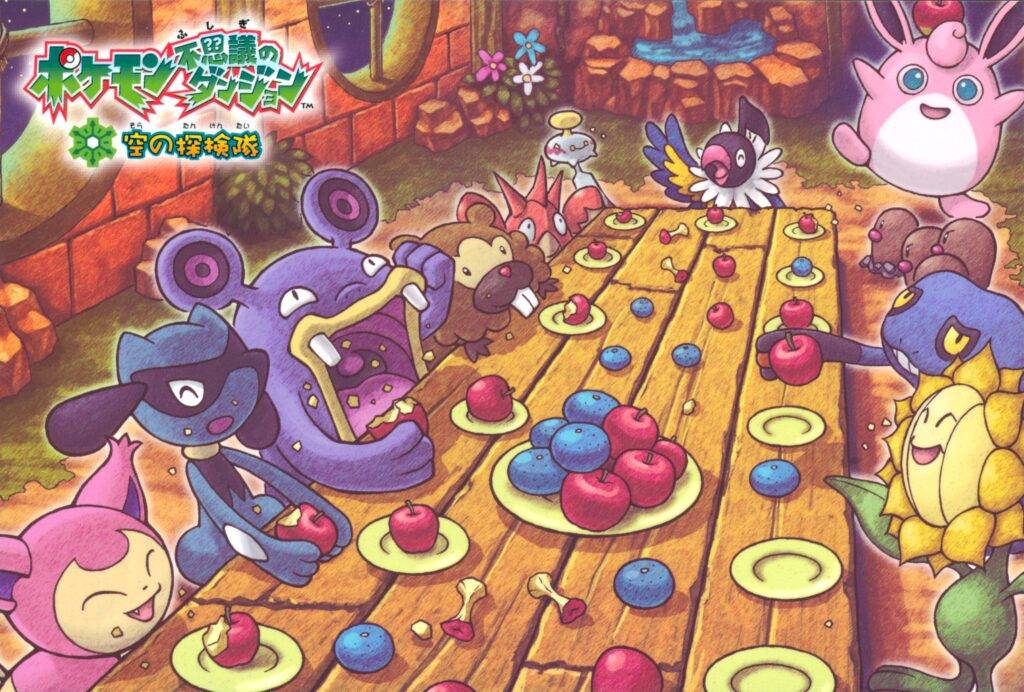
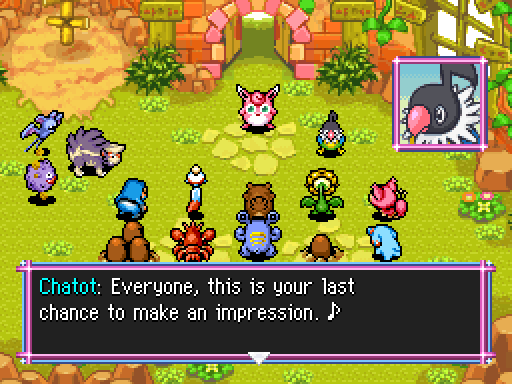
I think is best exemplified by the Wigglytuff Guild that the player joins toward the start of the game. Each character has their own motivations separate from the player, and they will be able to progress towards their own goals with or without the player. In fact, there are side missions where you can play as these side characters, which provides further background to each guild member’s quirks and personality traits. As the player, interacting with each of these side characters feels like interacting with a real person, someone who has existed long before they met you and will continue to exist long after this current interaction passes.
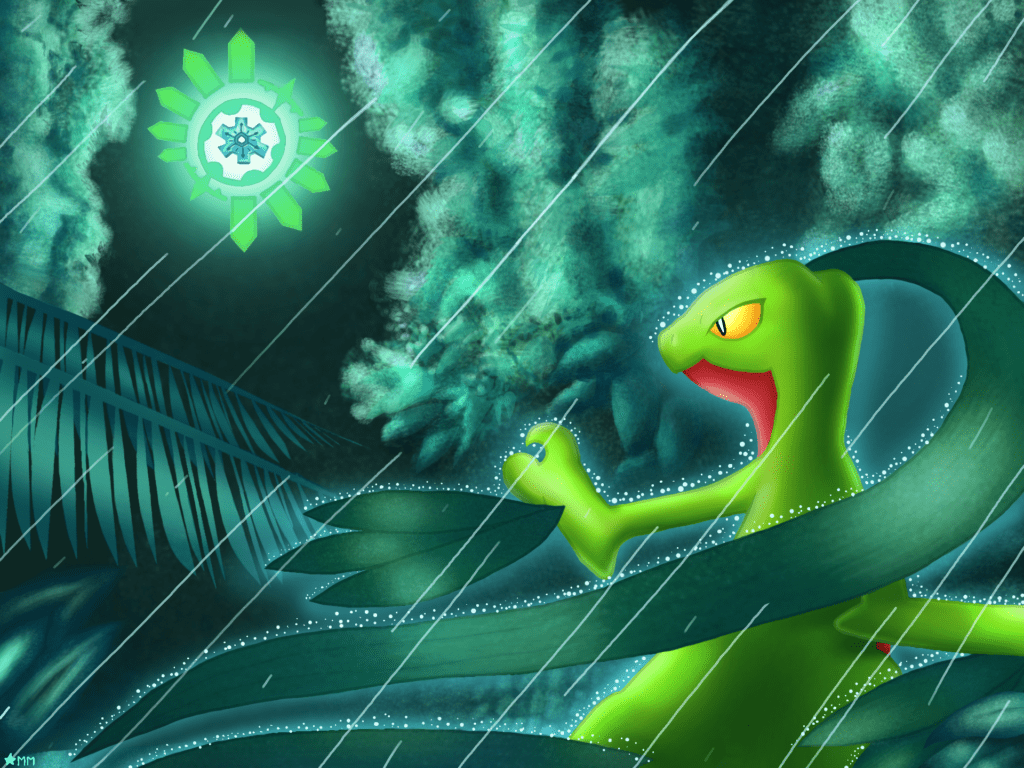
PMD follows an embedded narrative, similar to the mainline games. The difference is that PMD’s story is much more layered, which is in part due to the fact that the player starts the game with amnesia. In this way, as they learn about the world that they have come to, we are also learning beside them in a natural way. In the mainline games, exposition feels very artificial as other characters dump text on-screen at critical points. The main story of becoming a champion is sidelined at times when the player has to go off on subplot missions, such as stopping evil people from doing whatever their nefarious plot is. These games do not do a great job of interweaving these narratives, which can feel disjointed at times, almost as if the game designers are trying to tell two separate stories. PMD is different in that it sees multiple narratives unfold at the same time: the player trying to recover their memories, the partner becoming braver, the guild working to stop a mysterious individual that is creating havoc across the land. These multiple narratives are inherently intertwined, as we come to find. [Major spoilers ahead]
As it turns out, the player is actually ahead human from the future that was sent to the past to stop an event that destroyed the future, but an accident turned them into a Pokémon and took away their memories. The mysterious Pokémon causing trouble is actually the player’s partner Pokémon from the future and is actually trying to prevent the cataclysmic event from occurring. And the partner Pokémon in the past actually has the key to stopping all of this and is able to step up in the final moments. You go around the world and even into the future and back, all to save the world. The stakes are real, and my palms are sweaty.
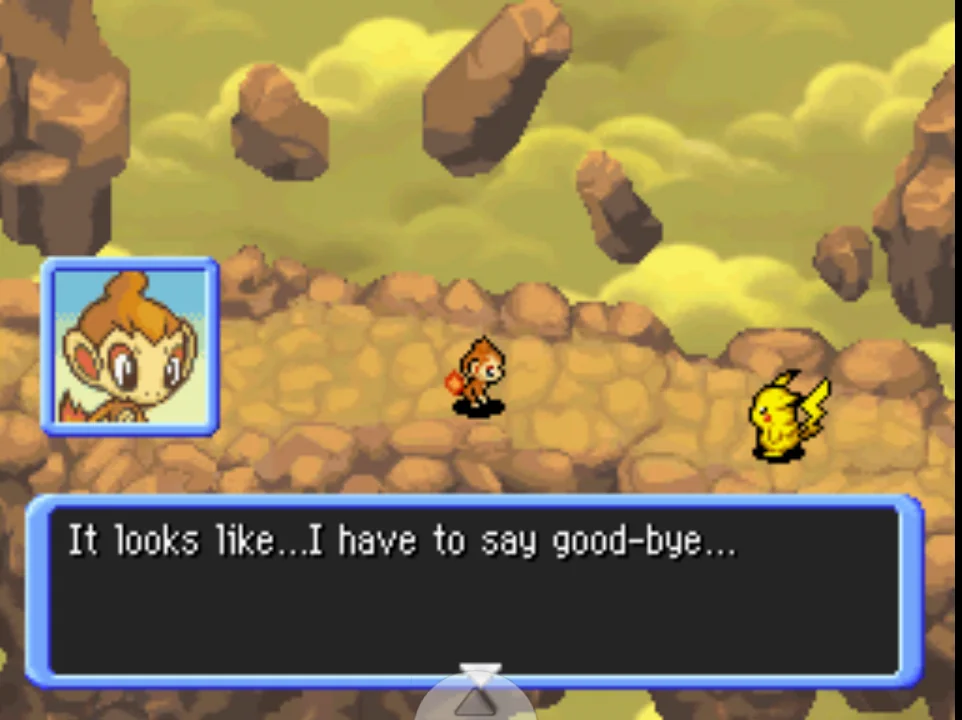
Throughout this game, these intertwining narratives were able to come together in such a masterful way. Because we, the player, have spent so much time interacting with all the other Pokémon in the game and forming bonds through our adventures, this climax is so rewarding and so heart wrenching. I cried playing this at 8. I cried playing this at 23.
And even then, after the main story of the game is complete and the world is saved, that is not the end. There is still more that this world has to offer. This is a stark contrast from the mainline games where it feels like everything is over once you become the Pokémon champion. In PMD, once the cataclysmic event is avoided, the world keeps spinning. The guild members continue on their missions, the Pokémon you have saved go on about the lives, and you return to your new home.
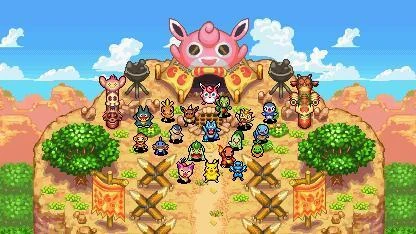
Ultimately, I think that as an embedded narrative does really well because the game designers were really focused on telling a good story. Whereas the mainline games might focus on the gameplay and have the story been ancillary to that, PMD is a story-focused game where the gameplay is ancillary. To be honest, the dungeon crawling aspect of the game can be a bit repetitive, and it is certainly not the reason why I like this game. Rather, I am willing to slog through hours of dungeon-exploring to be able to get to the next part of the story. I want to know what happens next. And that is not really something I can say for the mainline games.
As someone whose first ever video game was Pokémon Pearl, I have always loved Pokémon. There have been many mainline and spinoff games over the years, but I can confidently say that none of them tell a story like PMD. None of the other games can get me to care about the other characters as much as PMD. None of them have built a world that feels so quite like PMD. PMD invites the player into a world where there are no humans and Pokémon talk, yet it feels more real and more alive than any other game. Even now, 15 years after I first played it, I feel as though I myself am being transported into this Pokémon world.
Ethics Question
In Pokémon Mystery Dungeon: Explorers of Sky, the characters’ bodies are intrinsically tied to the game’s mechanics. Because of the rock-paper-scissors-style elemental typing that this game is known for, a character’s abilities are in part tied to their species. In the game, A Squirtle has an advantage over a Charmander because water beats fire. In Pokémon, certain Pokémon do hold biological advantages over others based on their typing. At the same time though, Charmander can learn Thunder Punch, which is super effective against Squirtle. Pokémon are able to learn abilities that give them an edge against Pokémon they would otherwise be weak against. While there are inherent differences between Pokémon, one thing these games emphasize is the collaborative nature of working with others. While you may be weak against one Pokémon, there may be someone on your team that is strong against them.
Besides this elemental typing mechanic affecting gameplay, there are some cultural/societal effects of these types. For example, in Explorers of Sky, there is a group consisting of poison-type Pokémon, which are presented as evil, which creates a sort of social stigma against these Pokémon. Ultimately, however, it is revealed that these Pokémon are also just doing their best to get by in their own way.
And I think that is one thing that is emphasized throughout this game—that there are no bad Pokémon. Sure, some may act in a certain way, but that is not reflective of the specific Pokémon they are but rather a product of the circumstances they are in. That is to say, a Pokémon is not evil because they are a dark-type or poison-type but because they got dealt a bad hand and had to do whatever they could to survive.
In Pokémon, characters come in all different sizes and shapes—there are hundreds of different species in PMD alone. And these games really highlight that everyone is valued and has their own strengths. And by working together, anyone can achieve their goals, whether it be becoming the best explorer or even just making new friends.
Pokémon Mystery Dungeon: Explorers of Sky remains my favorite game to this day because no game has brought me to tears quite like this. It invited me into this world and made me care deeply about it in a way that really cannot be compared.
It is such a good game.